Urban Regeneration and Community Spirit
Jeong Young-hoon
Department of Architecture
We walk the street. And we look at the street. What do you see from what you see? The building fronts defines a verge between the road and the building. The sidewalk of 200mm height tells us, here is for people, there is for cars. Where are they from, what makes them? A city is a gigantic network composed of an assembly of settled people. Who knows, someone will look down on a busy street from a mountain top and recall a small house with a backyard that had a big tree that used to be there.
A day, a year, ten years. A city has gone through changes on the level of countless units. Who makes these changes? People, time, or culture?
I feel different about walking down the streets of Nantes or Paris opposing to when I stroll in a Korean city that I find very familiar. Why do I feel different about these cities? Once we sense this difference and understand what causes it, we can finally encounter and deal with problems before us.
I. Objective
I will go back to the era under Japanese colonialism to talk about the urbanization process in Korea. The Joseon Dynasty, Korea then, began enforcing modernization under Japanese pressure and colonial policy. As a result, the concrete and steel structures filled up the Korean cities. From the independence day till around the Korean War, the United States and the UN had led the postwar recovery process in Korea. The Korean architects then – like Kim Swoo-geun, for instance – needed the US government’s permission to execute their designs. Although it was inevitable, there has always been a subject that controls over policy and capital, and we submit to it.
Things have not much changed till nowadays. The existence of two contrasting policies over urban regeneration is a typical example. The conservative party pursued a new town project for redevelopment in contrast to the progressive party that aimed to preserve the existing while integrating a new program into it
Given these conditions, we can say that the difference between urban regeneration in France and Korea is in the subject, government, that operates and executes this project. Keeping this in mind, we can learn from the successful case of urban regeneration in Nantes.
Additionally, I will clarify that civic consciousness in my paper does not refer to individual citizens. It is more about a structured sense of community
II. Research Methods
To understand how urban regeneration in France is different from that in Korea, we should first observe these cities from the citizens’ eyes. I visited this city for investigation, yet I tried to experience this city as its citizen.
Anything I find different or exotic about French cities will come from my experiences in the Korean cities. Thus, I will compare the French urban regeneration policy with the Korean one based on my experiences in both countries and the data I collected during my visit to France.
III. Results
The key differences between French and Korean cities I found are the followings:
1) A wide boulevard
2) A flexible distinction between driveways and sidewalks
3) People’s behaviors on the streets
The distinguishing feature I found in the French cities was wide boulevards. On a boulevard, a person passes by after a tram passed by, or a café opens an outdoor café when it is sunny. Then people sit there, enjoy the sunshine, and soon some more people come, join and form new groups.
Why are the French cities different from Korean ones like this?
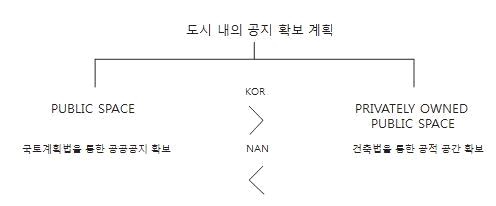
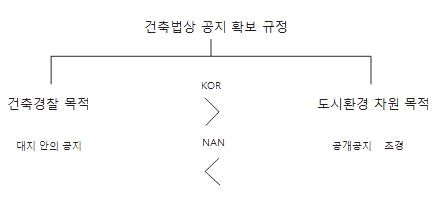
The first thing I found was a difference in how each government secures vacant lots in its city. In Korea, the National Land Planning Act takes effect as the upper law for securing vacant lots for public uses. In France, however, the Building Act takes precedence over the National Land Planning Act. Consequently, when the two governments designate the public open spaces(POS), the results come out differently. One country has its POS in the middle of the land while the other has its POS on the side road.
That is, the different policies lead to a difference in how the cities look. And how they look different shapes different experiences and behaviors for their citizens.
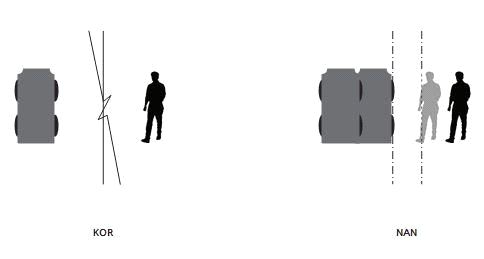
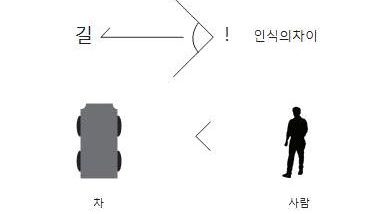
Also, there is a difference in how the citizens from both countries perceive the roads. People from the two countries perceive differently about who occupies the streets. In Korea, most people perceive automobiles as occupants. Contrarily, France puts pedestrians first. People’s different perception of the occupant of the road causes the differences in the road shapes.
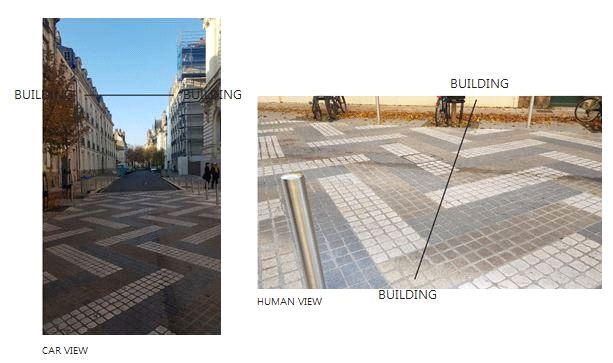
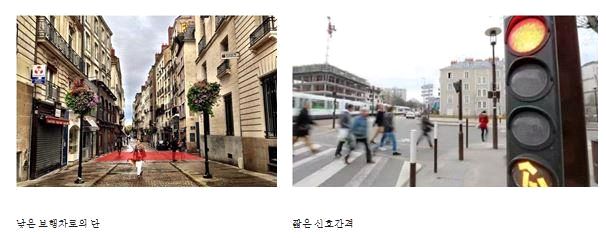
On the roads of the areas crowded with people, the pathway patterns are elongated than usual. It gives caution to vehicles on the road and provides convenience to pedestrians. Besides, frequent traffic signal timing soothes traffic flow in the urban system. It further alleviates the traffic jam for pedestrians.
Practically, we cannot immediately adopt the positive models of France to situations in Korea. However, as mentioned above, external forces always used to determine the Korean urban policies historically. Now the Korean urban policies are up to the political affiliation of the government. In particular, the variation of urban policies depending on the government’s political color only allows short-term policies that last for four to five years only that these policies cannot securely settle down and make real improvements.
Now we are questioning the direction we should head for based on our past experiences. To this question, we should first ask what our fundamental problems are rather than hastily fix things right in front of us. From there, we should ponder on what we can employ and sustain from successful examples of other countries.
The Project Nantes reminds me of the Gunsan General Motors shutdown. When a city’s core industry collapsed, who did we look first? For the city to recover and grow again, where should we focus? When we start asking these questions, we will finally build a sustainable city for the future.
도시재생과 공동체의식
정영훈
미술원 건축과
우리는 길을 걷고 또 바라본다. 그곳에 보이는 것들은 과연 어떤 형태를 지니고 있는가? 건물의 입면은 이곳이 길과 건물의 경계요, 인도의 200mm 턱의 높이는 이곳은 차가 다니는 길이요 사람이 지나가는 길이요 하며 이야기한다.
과연 그들은 어디에서 왔고 무엇으로 만들어졌는가? 도시란 사람의 집합이 정착하며 만들어진 하나의 거대한 네트워크이다. 산 위에 올라서서 내려다보이는 수많은 건물과 자동차들을 보며 누군가는 그곳에 있었던 작은 집과 마당에 자라고 있는 큰 나무 한 그루를 생각하리라.
도시는 하루 1년 10년……수많은 단위 위에 변화해왔다. 이를 움직이는 주체는 사람들일까 시간일까 문화일까?
프랑스 낭트와 파리의 거리를 걸으며 보이는, 느껴지는 차이는 한국 도시에 익숙한 나에게는 낯섦으로 다가올 것이다. 또 이 차이는 어디에서 나타난 것일까? 그 차이를 이해하고 그 주체를 알게 될 때 우리는 우리가 나아가야 하는 방향과 그 근본의 문제를 마주할 수 있을 것이다.
I. 연구의 목적 및 중요성
난 한국의 도시화 과정의 시작을 ‘일제강점기‘부터 시작해 보고자 한다. 이때 조선은 일제의 외압과 식민지정책에 따라 근대화를 주입하기 시작했다. 이에 도시 또한 목조 건축을 넘어 콘크리트와 철근을 이용하는 근현대 건축물이 들어섰다. 나아가 독립을 거쳐 한국전쟁 전후에는 UN과 특히 미국의 원조를 통해 전후 복구가 이뤄지기 시작했으며, 이 당시 등장한 김수근과 같은 한국의 건축가들 또한 설계를 실행시키기 위해선, 미 정부의 허가가 필요했다. 불가피했지만 이렇듯 늘 정책과 자본을 이끄는 주체는 존재했고 우리는 이를 따랐다.
현대사회 또한 이와 유사하다. 큰 예시로 뉴타운 재개발과 도시 재생 사업이라는 큰 두 가지 정책이 존재한다. 보수 정권에서는 새로운 땅을 만들어 개발을 시도했고, 진보 정권에서는 기존의 것을 유지하고 보존시키며, 새로운 프로그램과의 융합을 시도했다.
이와 같다면 프랑스에서 가장 적나라하게 접할 수 있는 한국과의 차이는 정책을 운용하고 실현하는 정부와 주체에 있을 것이고 이를 이해한다면, 성공사례로 꼽히는 낭트 도시재생 사업에 있어 우리가 취해야 하는 태도를 발견할 수 있을 것이다. 이와 함께 우리 흔히 생각하는 시민의식의 차이 또한 시민들의 이야기가 아닌, 만들어진 공동체 의식과 같다는 것을 이해할 수 있길 바란다.
II. 연구 방법
이 차이를 이해하기 위해선 시민의 시선으로 도시를 바라볼 필요가 있다. 답사를 목적으로 시작한 프로젝트이지만, 최대한 이 도시에 융화되어 도시를 바라본다.
여기서 느껴지는 낯섦 그리고 신기함이 있다면, 그것은 한국의 도시에서는 느껴보지 못한 이곳과 한국 도시의 차이점일 것이다. 이렇게 수집된 사례 혹은 데이터를 기반으로 만들어진 원인을 분석하여 한국 도시 정책과 함께 비교하여 그 차이를 이해해 본다.
III. 연구 결과
크게 발견한 요소는 아래와 같다.
1) 넓은 도로
2) 차도와 인도의 유동적 구분
3) 길에서의 행위
이들이 가지는 가장 큰 공통점은 넓은 도로다. 트램이 지나가는 길을 사람이 지나가기도 하고, 마주하는 건물 사이의 도로가 넓어서 맑은 날에는 카페 앞에 테라스가 생기고 사람들은 그곳에 앉아 날씨를 즐기고 동시에, 길거리에 모여들어 새로운 집단을 만들기도 한다. 왜 이런 차이를 가지게 된 것일까?
발견한 첫 지점은 도시 내의 공지 확보 계획에 있다. 한국은 국토계획법이 상위법이 되어 공공공지를 확보하고, 프랑스는 건축법이 우선되어 공적 공간을 확보한다. 이를 토대로 공개공지를 형성할 때 나오는 결과는 대지 내부에 공개공지가 존재하는 모습과 도로를 측면으로 공개공지를 조성하는 모습으로 나뉘게 된다. 바로 정책의 차이가 도시의 모습을 바꾸고 이를 통해 사용자들이 경험하고 또 행하는 행위의 형태가 달라지는 것이다.
나아가 길을 대하는 인식의 차이도 존재한다. 길을 점유하는 대상이 누군가의 차이인데, 한국은 자동차 중심의 인식이, 프랑스는 보행자 중심의 인식이 우선이다. 이와 같은 인식의 차이가 도로의 형태의 차이에 있어 큰 요인이 된다.
보행자가 밀집한 구역은 인도의 패턴이 연장됨으로써, 차량에는 경고를 보행자에게는 편의를 제공한다. 더하여 짧은 신호간격은 도시의 흐름에 있어 보행자가 정체되는 것을 완화하는 역할을 한다.
현실적으로 이런 긍정적인 사례를 당장 한국의 도시개발과 정책에 반영하기에는 무리가 있다. 하지만 앞서 설명했듯 한국의 도시 관련 정책은 외부의 세력에 의해서 결정되었고, 현재에는 정권의 색에 따라 결정된다. 특히 정권의 색에 따라 결정되는 모습은 4년과 5년이라는 짧은 기간을 가지는 터라 정착되어 개선되기에는 시간이 부족하다.
우리는 지금 과거의 경험을 토대로 앞으로 나아가야 할 방향을 고민하고 있다. 이에 당장 눈에 보이는 형태를 바라보며 고쳐나갈 것이 아니라, 그 근본은 무엇이고, 무엇을 반영하며 지속시킬 수 있을지 함께 고민하고 만들어 나가야 한다.
낭트의 도시개발 사례를 보면 얼마 전 군산 GM 사태가 떠오른다. 도시를 이루는 기반 산업이 무너졌을 때 우리는 누구를 먼저 바라보았는가? 도시가 스스로 성장하고 일어서기 위해서 우리는 어떤 곳에 집중해야 하는가? 이 질문을 시작할 때 지속 가능한 도시의 미래가 그려질 것이다.