Exhibition introduction
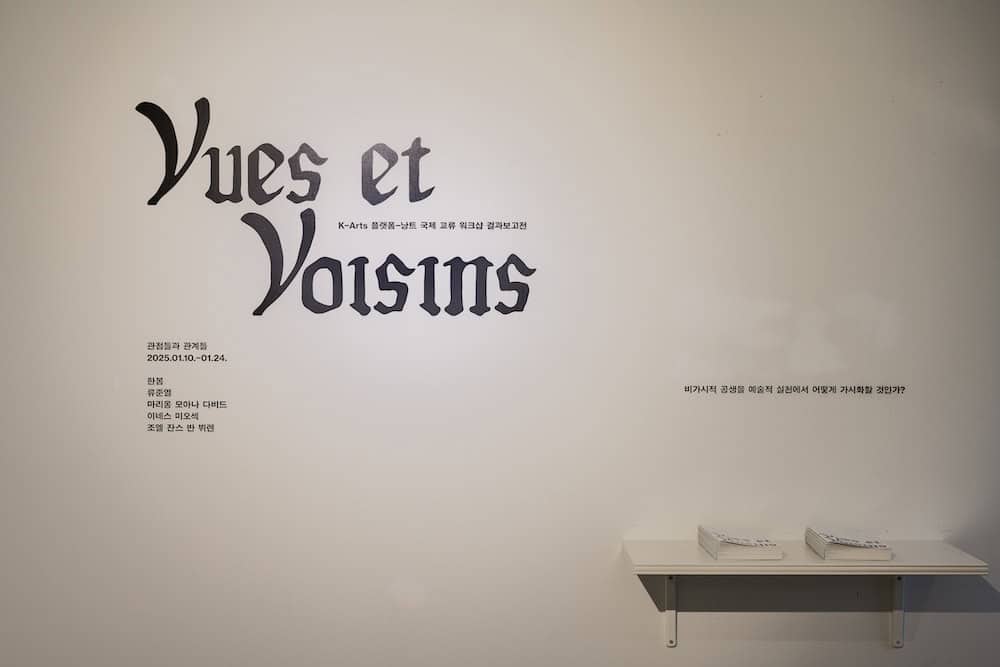
Vues et Voisins
Views and Neighbors
Art of today has transcended the role of imitation or reproduction yet fulfilled sensory, conceptual, and political functions in various aspects so that it only makes the well-known quote by Paul Klee (1879–1940), “Art does not reproduce the visible; rather, it makes visible” become more of a cliché. Nonetheless, the contention over how to visualize art will not easily be dismissed as long as it exists conditioned in a certain way. This is partly because visualization in art refers not only to “making some existence or phenomenon seen before our eyes” in a biological sense, but also to “exposing some existence or phenomenon to the world” in a societal sense. Additionally, this is because the concept of vision has been understood as largely relying on the Cartesian logos throughout the history of Western philosophy. Contemporary art, particularly after Postmodernism, has acutely resisted the violence of the modern rationalism rooted in Cartesian logos. Hence, the question of visualization in contemporary art stems from a conflict between the inherent nature of art and contemporary art’s resistance to logos.
Even more, we have entered an era where all things in the ecosystem, encompassing life and nonlife, are considered regarding the subject or object of the vision contrary to the precedent time when we limited our discussion to humans only. Thus, making the invisible visible in contemporary art has become even more complex and complicated.
In this regard, we can explore how to make the invisible symbiosis visible in the ecosystem through artistic practices. Foremost, we need to find out whether the symbiosis within the ecosystem, including humans, is indeed invisible, and if so, why. Then we should examine the problems that can arise when attempting to make the invisible visible, associated with the vision’s logo-centric violence mentioned earlier. Finally, to resolve our concerns about minimizing these problems while making the invisible visible, we reach for clues in a theory of care ethic and aesthetics. Overall, we propose the best way to make invisible symbiosis visible to the world is, to let us “feel together” the interconnections within its mechanism rather than to have it defined as a “visible” object and watch it. Through this approach, we will avoid objectifying interrelations between humans and the ecosystem based on the dichotomous logic or the assumption of considering humans as hierarchically superior to nature. Our goal is to envision artworks that can portray interrelations between humans and the ecosystem as a part of nature, highlighting dimensions of empathy and solidarity.
Is Symbiosis Truly Invisible? Why?
The first thing to do is to clearly define “symbiosis” in the context of this workshop. A “symbiosis” is defined as “living together while helping each other” in the dictionary. It also refers to “living together in a close connection between different types of organisms” in a biological term. In most cases, the concept implies mutualism, in which the species involved benefit from each other. Nevertheless, it is important to note that there are varied concepts of symbiosis beyond the superficial meaning of “living together.” One is commensalism, where one species benefits while the other is unaffected. Amensalism is another kind, where one is harmed while the other is unaffected. In parasitism, one benefits at the expense of the other. Therefore, we will indicate all these complex interrelationships discovered in the ecosystem as symbiosis.
The question about the invisible nature of symbiosis reflects the intricate dynamics between Western anthropocentrism and modern capitalism. Western anthropocentrism since the Enlightenment has constructed a hierarchy that privileges human reason over nature while separating humans from nature. The hierarchical dichotomy, invented by modern philosophers including René Descartes (1596–1650), has contributed to human domination of nature by perceiving humans as the reasonable subject and nature as the object. As a result, the complexity of symbiosis between humans and the ecosystem surrounding them is simplified and reduced to segmented processes. Through such a hierarchical and dichotomous approach, symbiosis as complex interrelations among diverse entities has become invisible. Power structures determine what is important or not in the public sphere. By their anthropocentric perspective and execution, the ecological symbiosis, essential for human survival, becomes neglected in the human-centered system.
In addition, modern capitalism reinforces the invisible nature of symbiosis through mechanisms that prioritize efficiency and rapid development. An ecological symbiosis, characterized by its slowness and subtlety, falls behind the tempo of capitalist mechanisms. An idea of acknowledging the existence and necessity of symbiosis in the ecosystem tentatively condemns the production and consumption mechanisms of contemporary society so that it can be seen as an attempt to shake the foundation of the capitalist economy. However, not only do today’s technology and media, under the influence of capitalistic logic, reveal reality but also transform or filter it. Even worse, digitalization and virtualization of perception due to technological advancements lead to distancing us from ecological symbiosis. Our chances to directly observe ecosystems are preempted by high-resolution screens and digital interfaces that reconstruct our experiences of the world. Related to this, Peter Pál Pelbart (1956–), a philosopher from Brazil, argues through the “regime of total visibility” that a flood of images and information in already saturated conditions flattens our reality, making essentially important things invisible.
To sum up, the invisibility of symbiosis is comprised of anthropocentrism for the ideological foundation and capitalism for the economic mechanism with technology as the tool that enhances the phenomenon. This calls for our awareness of the importance of transcending the reductionism framed by anthropocentrism and capitalism to make the invisible symbiosis visible. However, if the potential concerns that may arise when pursuing this goal are left unaddressed, it is easy to fall back into the same logical frame.
What Are the Problems Behind Making Invisible Symbiosis Visible?
At this point, we will examine the possible problems that may occur when making the invisible symbiosis visible through artistic practices. Beyond the invisibility of symbiosis, which originated from anthropocentrism and capitalism, visibility, too, is a difficult topic to deal with. The concern related to the latter extends to the question of “how the visualized is produced and received” beyond “what is visualized.” One is rational violence imposed by the eye that attempts to reduce the complexity of symbiosis and dominate it. Another is a tendency to romanticize or pastorally idealize that threatens to flatten and generalize symbiosis. Both problems, seemingly opposing, commonly fail to properly unveil the complicated and relational nature of symbiosis in the ecosystem.
First, making invisible symbiosis visible is at risk of reducing symbiosis to the analyzable object. The rational violence imposed by the analytic perspective requires symbiosis to be in a shape that can be perceived and understood from the anthropocentric point of view. It may be clear and simple, yet the dynamic complexity of symbiosis is eliminated along the way. Moreover, visibility in the capitalist system is accompanied by economic and commercial instrumentalization; in other words, symbiosis in the sense of living complex interrelations is distorted and transformed into a commodity or spectacle. Thus, rational violence by the eye arises from the dynamics of capitalism intertwined with anthropocentrism, which dominates, appropriates, and exploits things under the eye.
Second, romanticization or pastoral idealization is problematic, for it simplifies nature and symbiosis as a relationship that perfectly harmonizes without conflicting struggles. As explained previously, symbiosis is a concept with an extensive range of coexistence, encompassing mutualism, commensalism, parasitism, and more; this coexistence is often characterized by tension and conflict. Romanticization or pastoral idealization neglects these inherent tensions and conflicts of symbiosis, merely reproducing an image that dilutes the dynamics of the ecosystem.
These two problems are an extension of previously examined notions of anthropocentrism and capitalism. In the former case, symbiosis is the object of domination and exploitation meanwhile in the latter, it becomes the object of aestheticization and normalization. Instead of functioning as an alive sphere for interaction, symbiosis is reduced to a mere “visible” object dependent on the interplay of power and consumption in both instances. These issues highlight the difficulties of visualizing invisible symbiosis without objectifying it.
How to Make the Invisible Symbiosis Visible Without These Problems?
We have found clues in care ethic theory to minimize the problems mentioned earlier. The ethic of care, as argued by American psychologist Carol Gilligan (1936–), is based on the question, “What can be practically done, rather than adhering to principles, to preserve and maintain human relationships in given circumstances?” This requires understanding individual situations. Gilligan puts it this way: it calls for concrete and narrative thinking in an ordinary context instead of formulated and abstract reasoning. For Gilligan, the concept of morality is defined by a fundamental concern for the welfare of others; it centers on the moral development of responsibility and the essence of human relationships. The care ethic, rooted in a concern for others and attention to individual situations, suggests an alternative for visualizing symbiosis without reducing it to a generalized object.
We expand the notion of care ethic to art, applying it to our creative practices by emphasizing mutual relationships, care, and empathy for others. In other words, not only do the outcomes present themselves before our eyes, but also the relational and cohesive processes that support the system or structure. Artistic practices of this sort focus on creating the context in which unexpected or new relationships can arise while facilitating a mechanism of interconnection that comprises the involved parties’ sensory interactions through bodies, voices, emotions, and others.
If applied to the symbiosis of the ecosystem, making invisible symbiosis visible through art is not merely a visual representation of the structure; it is an experience of feeling it together, thereby allowing symbiosis to reveal itself to the world. This implies working with the dynamics of interactions that result in artworks through live interactions among humans, non-humans, and the environment. To put it simply, it creates a collective and tangible sphere for artistic practices where people are involved in making artworks by “feeling together” the complexity and vivacity of ecological symbiosis. Therefore, the best means of making invisible symbiosis visible through artistic practices—by expanding and employing care ethics in the realm of art—is to “feel together” the complex interconnections.
The Exhibition As its Artistic Practice
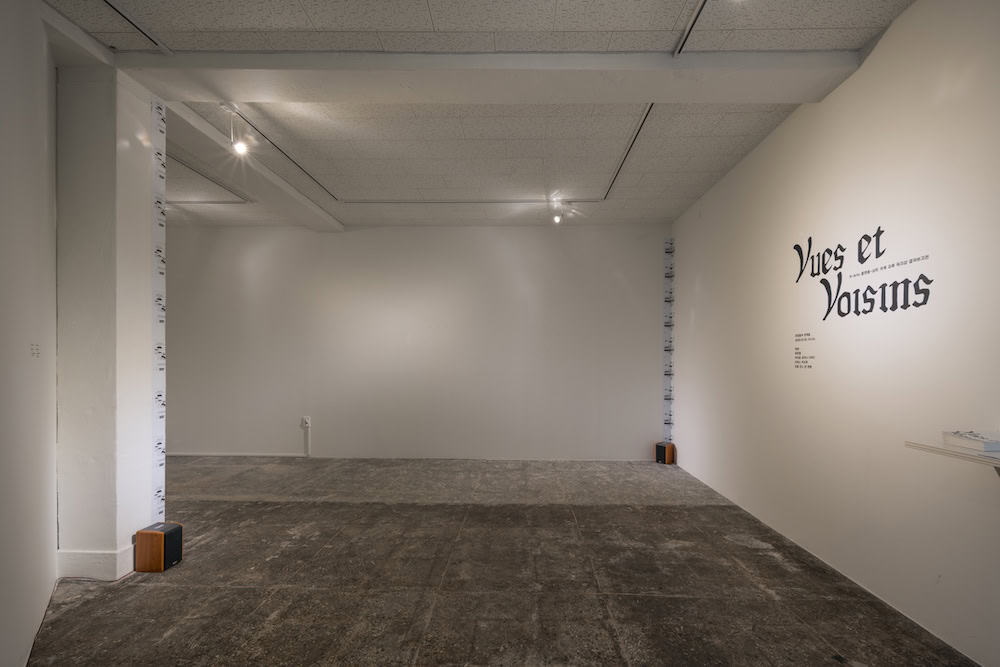
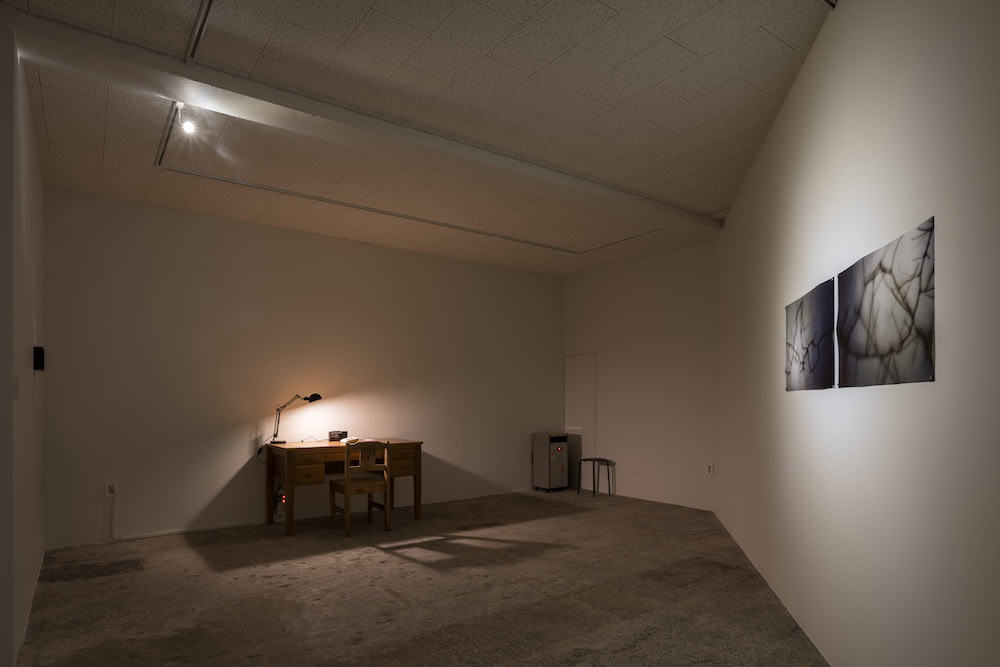
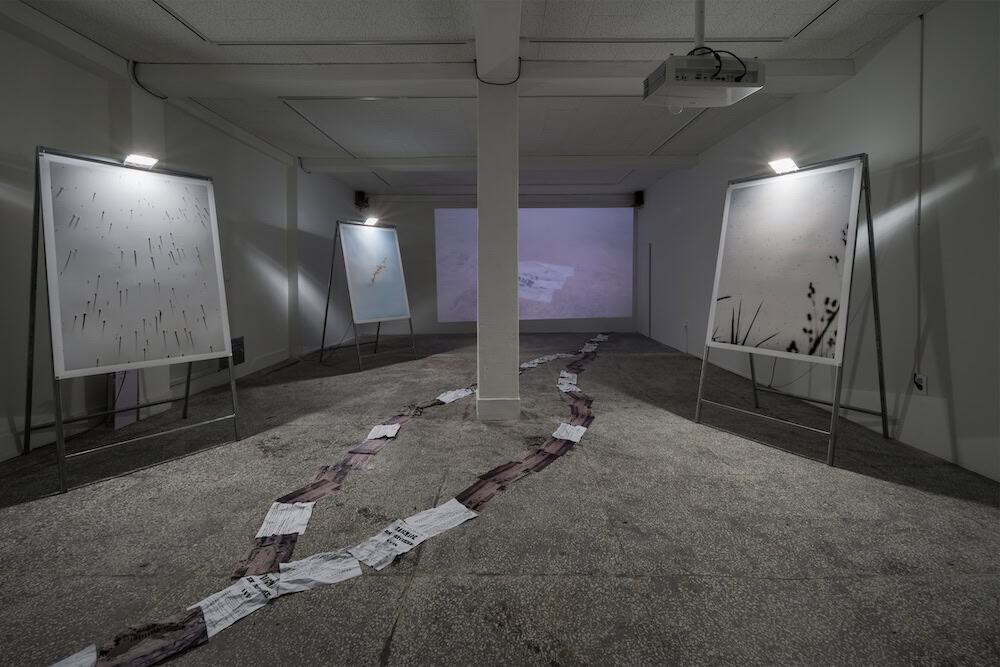
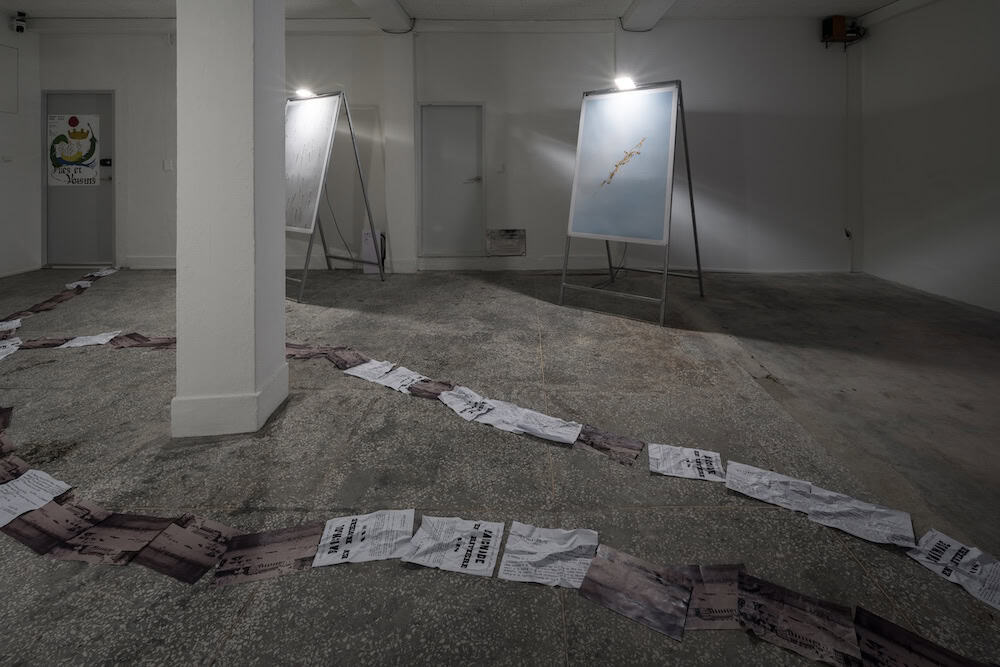
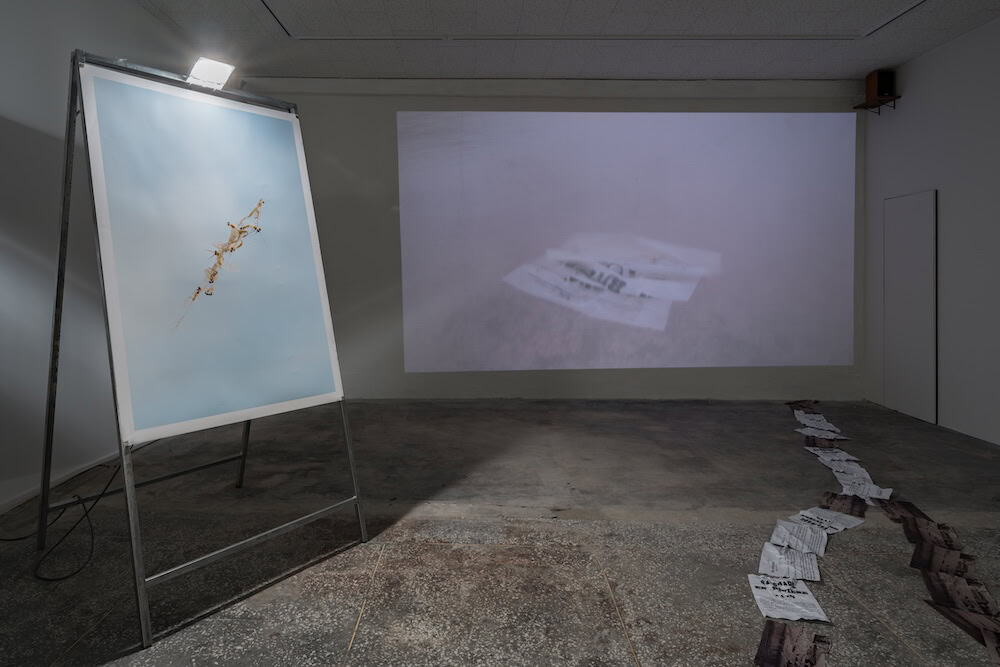
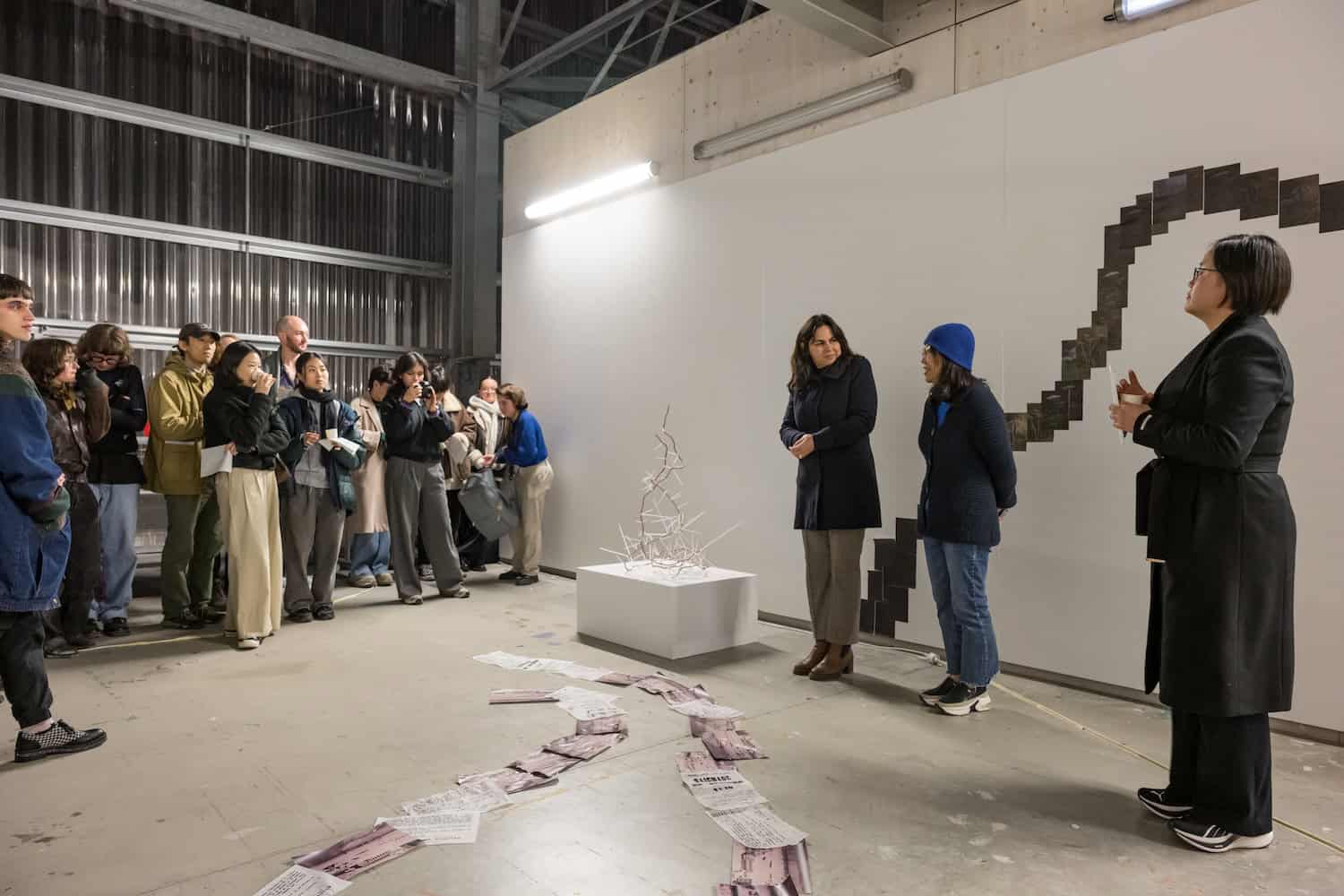
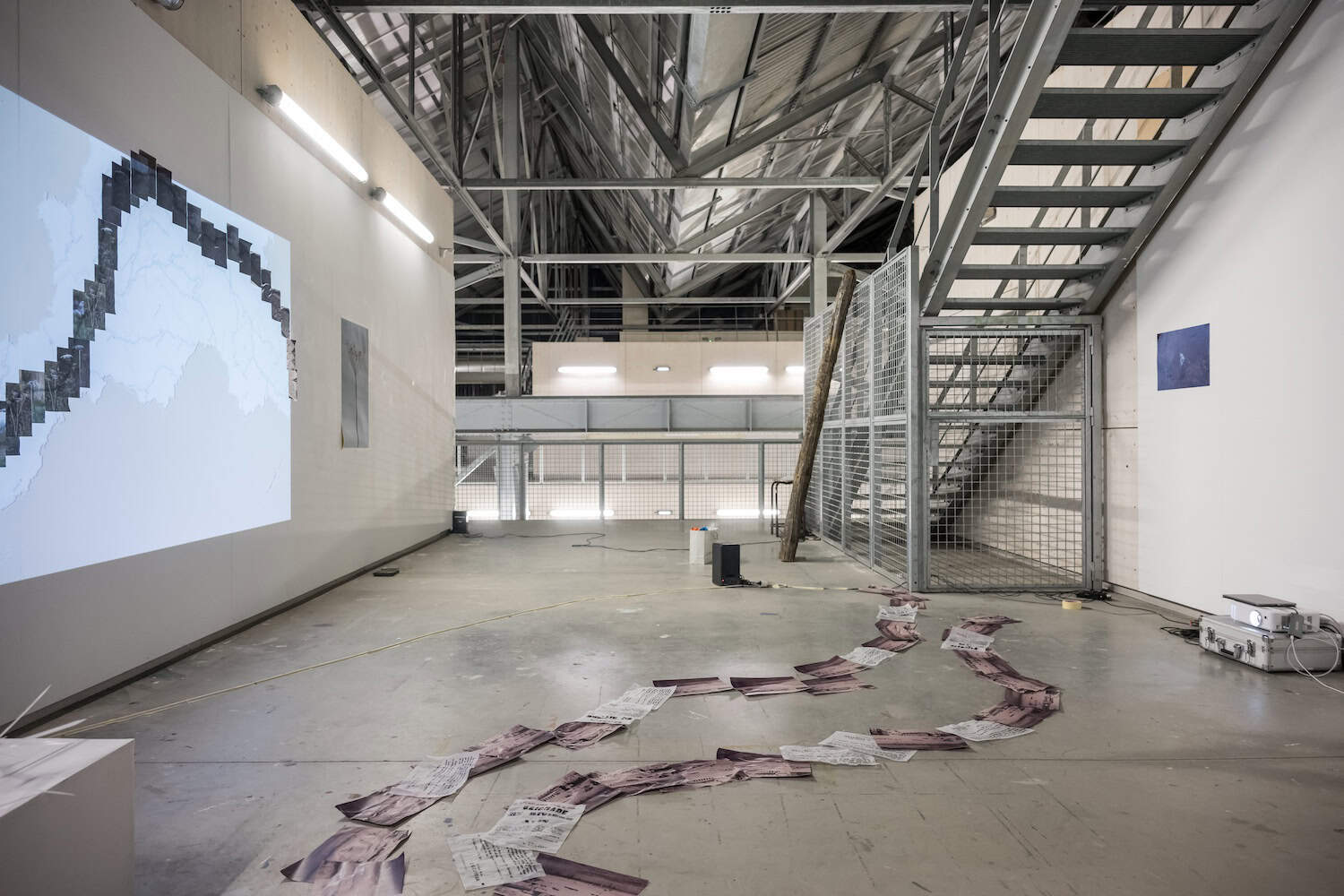
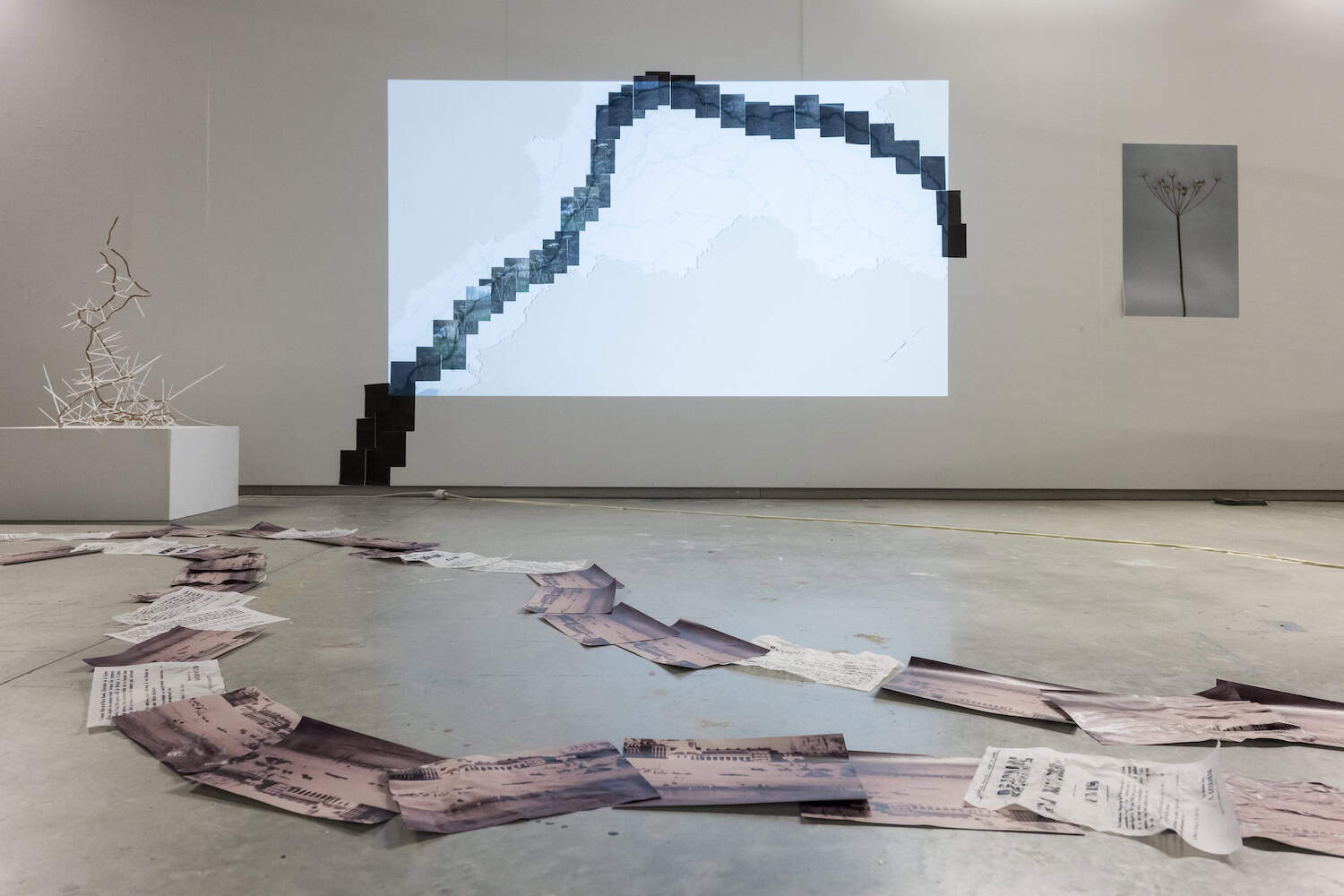
The exhibition, “Vues et Voisins (Views and Neighbors),” consists of works that artistically embody the invisible interactions within the ecosystem of Nantes, France. The exhibition title is a variation of the title of a poetry collection, Vues et Visions (Views and Visions) (1914) by Claude Cahun (1894–1954), a trailblazer of 20th-century queer feminist art and surrealism from Nantes. Inspired by Cahun’s artworks, which illuminate the social outcasts, this exhibition converges the core concepts of “Nantes,” “(in)visibility,” and “interconnection.” Beginning with the resounding echoes of memories along the banks of the Loire river (Marion Moana David), a sojourner’s experiences linger in the landscapes of Nantes (Han Bom). As it flows through the river basin (Ines Miossec), the Loire river traverses France (Ryu Jun-yeol) and reaches the wetlands downstream (Joel Janse van Vuuren). Thus, this exhibition serves as a collage of artworks reflecting diverse perspectives and sensory experiences of the local ecosystem of Nantes, which in turn forms an artistic ecosystem itself.
The exhibitors engage with the people of Nantes, who come from diverse backgrounds and perspectives, all surrounded by the local ecosystem formed around the Loire river. They focus on those who are invisible—not only in a biological sense but also in a societal context—and strive to make them visible in their own ways. Through their artistic practices, the concept of “vue (view)” transcends “vision (sight),” which is merely the object processed by the brain based on logos, evolving into a symbiotic sense that embodies the meaning of “voisin (neighbor)” and harmonizes with the components of the ecosystem of Nantes. To recap, the theme of making the invisible visible, which underlies their artworks, manifests as a “feeling together with” the complex interactions among entities within the ecosystem, positioning them as insiders rather than romanticizing or objectifying the mechanism from the outside. Overall, this exhibition uncovers the ecosystem of Nantes to the world, conveying its singularity and specificity in tangible and ethical ways, and enables us to experience how life and non-life are interconnected and interdependent.
Vues et Voisins
Views and Neighbors
Art of today has transcended the role of imitation or reproduction yet fulfilled sensory, conceptual, and political functions in various aspects so that it only makes the well-known quote by Paul Klee (1879–1940), “Art does not reproduce the visible; rather, it makes visible” become more of a cliché. Nonetheless, the contention over how to visualize art will not easily be dismissed as long as it exists conditioned in a certain way. This is partly because visualization in art refers not only to “making some existence or phenomenon seen before our eyes” in a biological sense, but also to “exposing some existence or phenomenon to the world” in a societal sense. Additionally, this is because the concept of vision has been understood as largely relying on the Cartesian logos throughout the history of Western philosophy. Contemporary art, particularly after Postmodernism, has acutely resisted the violence of the modern rationalism rooted in Cartesian logos. Hence, the question of visualization in contemporary art stems from a conflict between the inherent nature of art and contemporary art’s resistance to logos.
Even more, we have entered an era where all things in the ecosystem, encompassing life and nonlife, are considered regarding the subject or object of the vision contrary to the precedent time when we limited our discussion to humans only. Thus, making the invisible visible in contemporary art has become even more complex and complicated.
In this regard, we can explore how to make the invisible symbiosis visible in the ecosystem through artistic practices. Foremost, we need to find out whether the symbiosis within the ecosystem, including humans, is indeed invisible, and if so, why. Then we should examine the problems that can arise when attempting to make the invisible visible, associated with the vision’s logo-centric violence mentioned earlier. Finally, to resolve our concerns about minimizing these problems while making the invisible visible, we reach for clues in a theory of care ethic and aesthetics. Overall, we propose the best way to make invisible symbiosis visible to the world is, to let us “feel together” the interconnections within its mechanism rather than to have it defined as a “visible” object and watch it. Through this approach, we will avoid objectifying interrelations between humans and the ecosystem based on the dichotomous logic or the assumption of considering humans as hierarchically superior to nature. Our goal is to envision artworks that can portray interrelations between humans and the ecosystem as a part of nature, highlighting dimensions of empathy and solidarity.
Is Symbiosis Truly Invisible? Why?
The first thing to do is to clearly define “symbiosis” in the context of this workshop. A “symbiosis” is defined as “living together while helping each other” in the dictionary. It also refers to “living together in a close connection between different types of organisms” in a biological term. In most cases, the concept implies mutualism, in which the species involved benefit from each other. Nevertheless, it is important to note that there are varied concepts of symbiosis beyond the superficial meaning of “living together.” One is commensalism, where one species benefits while the other is unaffected. Amensalism is another kind, where one is harmed while the other is unaffected. In parasitism, one benefits at the expense of the other. Therefore, we will indicate all these complex interrelationships discovered in the ecosystem as symbiosis.
The question about the invisible nature of symbiosis reflects the intricate dynamics between Western anthropocentrism and modern capitalism. Western anthropocentrism since the Enlightenment has constructed a hierarchy that privileges human reason over nature while separating humans from nature. The hierarchical dichotomy, invented by modern philosophers including René Descartes (1596–1650), has contributed to human domination of nature by perceiving humans as the reasonable subject and nature as the object. As a result, the complexity of symbiosis between humans and the ecosystem surrounding them is simplified and reduced to segmented processes. Through such a hierarchical and dichotomous approach, symbiosis as complex interrelations among diverse entities has become invisible. Power structures determine what is important or not in the public sphere. By their anthropocentric perspective and execution, the ecological symbiosis, essential for human survival, becomes neglected in the human-centered system.
In addition, modern capitalism reinforces the invisible nature of symbiosis through mechanisms that prioritize efficiency and rapid development. An ecological symbiosis, characterized by its slowness and subtlety, falls behind the tempo of capitalist mechanisms. An idea of acknowledging the existence and necessity of symbiosis in the ecosystem tentatively condemns the production and consumption mechanisms of contemporary society so that it can be seen as an attempt to shake the foundation of the capitalist economy. However, not only do today’s technology and media, under the influence of capitalistic logic, reveal reality but also transform or filter it. Even worse, digitalization and virtualization of perception due to technological advancements lead to distancing us from ecological symbiosis. Our chances to directly observe ecosystems are preempted by high-resolution screens and digital interfaces that reconstruct our experiences of the world. Related to this, Peter Pál Pelbart (1956–), a philosopher from Brazil, argues through the “regime of total visibility” that a flood of images and information in already saturated conditions flattens our reality, making essentially important things invisible.
To sum up, the invisibility of symbiosis is comprised of anthropocentrism for the ideological foundation and capitalism for the economic mechanism with technology as the tool that enhances the phenomenon. This calls for our awareness of the importance of transcending the reductionism framed by anthropocentrism and capitalism to make the invisible symbiosis visible. However, if the potential concerns that may arise when pursuing this goal are left unaddressed, it is easy to fall back into the same logical frame.
What Are the Problems Behind Making Invisible Symbiosis Visible?
At this point, we will examine the possible problems that may occur when making the invisible symbiosis visible through artistic practices. Beyond the invisibility of symbiosis, which originated from anthropocentrism and capitalism, visibility, too, is a difficult topic to deal with. The concern related to the latter extends to the question of “how the visualized is produced and received” beyond “what is visualized.” One is rational violence imposed by the eye that attempts to reduce the complexity of symbiosis and dominate it. Another is a tendency to romanticize or pastorally idealize that threatens to flatten and generalize symbiosis. Both problems, seemingly opposing, commonly fail to properly unveil the complicated and relational nature of symbiosis in the ecosystem.
First, making invisible symbiosis visible is at risk of reducing symbiosis to the analyzable object. The rational violence imposed by the analytic perspective requires symbiosis to be in a shape that can be perceived and understood from the anthropocentric point of view. It may be clear and simple, yet the dynamic complexity of symbiosis is eliminated along the way. Moreover, visibility in the capitalist system is accompanied by economic and commercial instrumentalization; in other words, symbiosis in the sense of living complex interrelations is distorted and transformed into a commodity or spectacle. Thus, rational violence by the eye arises from the dynamics of capitalism intertwined with anthropocentrism, which dominates, appropriates, and exploits things under the eye.
Second, romanticization or pastoral idealization is problematic, for it simplifies nature and symbiosis as a relationship that perfectly harmonizes without conflicting struggles. As explained previously, symbiosis is a concept with an extensive range of coexistence, encompassing mutualism, commensalism, parasitism, and more; this coexistence is often characterized by tension and conflict. Romanticization or pastoral idealization neglects these inherent tensions and conflicts of symbiosis, merely reproducing an image that dilutes the dynamics of the ecosystem.
These two problems are an extension of previously examined notions of anthropocentrism and capitalism. In the former case, symbiosis is the object of domination and exploitation meanwhile in the latter, it becomes the object of aestheticization and normalization. Instead of functioning as an alive sphere for interaction, symbiosis is reduced to a mere “visible” object dependent on the interplay of power and consumption in both instances. These issues highlight the difficulties of visualizing invisible symbiosis without objectifying it.
How to Make the Invisible Symbiosis Visible Without These Problems?
We have found clues in care ethic theory to minimize the problems mentioned earlier. The ethic of care, as argued by American psychologist Carol Gilligan (1936–), is based on the question, “What can be practically done, rather than adhering to principles, to preserve and maintain human relationships in given circumstances?” This requires understanding individual situations. Gilligan puts it this way: it calls for concrete and narrative thinking in an ordinary context instead of formulated and abstract reasoning. For Gilligan, the concept of morality is defined by a fundamental concern for the welfare of others; it centers on the moral development of responsibility and the essence of human relationships. The care ethic, rooted in a concern for others and attention to individual situations, suggests an alternative for visualizing symbiosis without reducing it to a generalized object.
We expand the notion of care ethic to art, applying it to our creative practices by emphasizing mutual relationships, care, and empathy for others. In other words, not only do the outcomes present themselves before our eyes, but also the relational and cohesive processes that support the system or structure. Artistic practices of this sort focus on creating the context in which unexpected or new relationships can arise while facilitating a mechanism of interconnection that comprises the involved parties’ sensory interactions through bodies, voices, emotions, and others.
If applied to the symbiosis of the ecosystem, making invisible symbiosis visible through art is not merely a visual representation of the structure; it is an experience of feeling it together, thereby allowing symbiosis to reveal itself to the world. This implies working with the dynamics of interactions that result in artworks through live interactions among humans, non-humans, and the environment. To put it simply, it creates a collective and tangible sphere for artistic practices where people are involved in making artworks by “feeling together” the complexity and vivacity of ecological symbiosis. Therefore, the best means of making invisible symbiosis visible through artistic practices—by expanding and employing care ethics in the realm of art—is to “feel together” the complex interconnections.
The Exhibition As its Artistic Practice
The exhibition, “Vues et Voisins (Views and Neighbors),” consists of works that artistically embody the invisible interactions within the ecosystem of Nantes, France. The exhibition title is a variation of the title of a poetry collection, Vues et Visions (Views and Visions) (1914) by Claude Cahun (1894–1954), a trailblazer of 20th-century queer feminist art and surrealism from Nantes. Inspired by Cahun’s artworks, which illuminate the social outcasts, this exhibition converges the core concepts of “Nantes,” “(in)visibility,” and “interconnection.” Beginning with the resounding echoes of memories along the banks of the Loire river (Marion Moana David), a sojourner’s experiences linger in the landscapes of Nantes (Han Bom). As it flows through the river basin (Ines Miossec), the Loire river traverses France (Ryu Jun-yeol) and reaches the wetlands downstream (Joel Janse van Vuuren). Thus, this exhibition serves as a collage of artworks reflecting diverse perspectives and sensory experiences of the local ecosystem of Nantes, which in turn forms an artistic ecosystem itself.
The exhibitors engage with the people of Nantes, who come from diverse backgrounds and perspectives, all surrounded by the local ecosystem formed around the Loire river. They focus on those who are invisible—not only in a biological sense but also in a societal context—and strive to make them visible in their own ways. Through their artistic practices, the concept of “vue (view)” transcends “vision (sight),” which is merely the object processed by the brain based on logos, evolving into a symbiotic sense that embodies the meaning of “voisin (neighbor)” and harmonizes with the components of the ecosystem of Nantes. To recap, the theme of making the invisible visible, which underlies their artworks, manifests as a “feeling together with” the complex interactions among entities within the ecosystem, positioning them as insiders rather than romanticizing or objectifying the mechanism from the outside. Overall, this exhibition uncovers the ecosystem of Nantes to the world, conveying its singularity and specificity in tangible and ethical ways, and enables us to experience how life and non-life are interconnected and interdependent.
「관점들과 관계들—
비가시적 공생에서 가시적 예술로」
김민희
비가시적 공생에서 가시적 예술로」
김민희
“예술은 보이는 것을 재생산하는 것이 아니라, 보이지 않는 것을 보이게 하는 것이다.”라는 파울 클레(Paul Klee, 1879–1940)의 유명한 문장을 가져오는 것이 더 이상 새롭지 않을 정도로 현대의 예술은 이미 모방과 재현을 넘어 그 감각적·개념적·정치적 역할을 다각도로 수행하고 있다. 그러나 우리가 예술이라고 규정하는 것이 존재하는 한, 가시화의 문제는 결코 쉽게 사라지지 않는다. 이는 한편으로 예술에서의 가시화가 ‘어떤 존재나 현상을 눈에 보이게 한다’는 생물학적 의미뿐만 아니라 ‘어떤 존재나 현상을 세상에 드러낸다’는 사회적 의미를 포괄하는 개념이기 때문이고, 다른 한편으로는 시각이라는 것 자체가 서양 철학사 전반에서 데카르트적 로고스(logos)로 해석되어왔기 때문이다. 특히 포스트모더니즘 이후의 현대 예술은 이러한 데카르트적 로고스를 바탕으로 한 근대적 이성중심주의의 폭력에 민감하게 저항해왔으므로, 현대 예술에서 가시화의 문제는 예술 자체의 필연적인 조건과 로고스에 대한 현대적 저항 사이의 갈등에서 비롯되는 것이다. 게다가 시각의 주체와 대상을 모두 인간에 한정하여 논하던 시대를 지나 생태계의 모든 생물과 무생물을 포함하여 논하는 시대가 다가오자 현대 예술에서 보이지 않는 것을 보이게 하는 문제는 더욱 다양하고 복잡해질 수밖에 없다.
따라서 우리는 보이지 않는 것을 어떻게 보이게 하는지, 즉 ‘비가시적 공생을 예술적 실천에서 어떻게 가시화하는가?’라는 질문을 던져볼 수 있다. 이를 위해 우선적으로 우리는 인간을 포함한 생태계 내부의 공생이 정말 비가시적인지, 그렇다면 그 이유는 무엇인지 알아볼 필요가 있다. 그리고 나서 보이지 않는 것을 보이게 할 때 발생할 수 있는 문제들, 다시 말해 앞서 언급한 시각의 로고스적 폭력을 비롯한 여러 문제들을 살펴봐야 한다. 마지막으로는 이러한 문제들을 최소화하면서 비가시적 공생을 가시화하는 방법을 찾기 위해 돌봄(care) 윤리에서 그 실마리를 찾아볼 것이다. 결국 이와 같은 논의를 바탕으로 우리는 비가시적 공생을 ‘눈에 보이는’ 대상으로 삼는 것이 아니라, 그 공생 자체에 내재한 상호연결성을 ‘함께 느낌’으로써 세상에 드러내는 것을 최선의 가시화 방법으로 제시하고자 한다. 이를 통해 우리는 인간과 자연에 대한 이분법적 구분 혹은 자연에 대한 인간의 우월적 위계를 바탕으로 그 관계를 대상화하는 예술이 아니라, 자연에 속한 존재로서 인간과 생태의 역동적인 상호연결성을 공감과 연대의 차원에서 보여주는 예술을 상상할 수 있다.
공생은 정말 비가시적인가? 그렇다면 그 이유는 무엇인가?
우선, 이번 워크숍의 맥락에서 ‘공생(共生)’이라는 개념을 명확히 정의할 필요가 있다. 공생은 사전적으로는 ‘서로 도우며 함께 삶’으로 정의되고, 생물학적으로는 ‘서로 다른 종의 개체들이 밀접한 관련을 맺고 살아가는 것’을 의미한다. 대부분의 경우 이 개념은 두 종 사이에 서로 이익이 되는 상리공생을 가리키는 데에 사용된다. 그러나 ‘함께 산다’는 그 한자어의 의미대로 공생의 개념에는 한 종에게는 이익이 있지만 다른 종은 영향을 받지 않는 관계인 편리공생, 한 종은 피해를 보지만 다른 종은 아무 영향을 받지 않는 편해공생, 한 종이 다른 종을 희생하여 일방적인 이익을 얻는 기생 관계까지 포함된다. 따라서 우리는 생태계에서 발견되는 여러 개체 사이의 복합적인 상호관계를 공생이라고 부를 것이다.
공생의 비가시성에 관한 우리의 질문은 서구 사상의 인간중심주의와 현대 사회의 자본주의가 뒤얽힌 역학관계를 보여준다. 계몽주의 이후 서구 사상의 인간중심주의는 인간과 자연을 분리하여 자연보다 인간의 이성을 중시하는 위계질서를 형성했다. 르네 데카르트(René Descartes, 1596–1650) 같은 근대 철학자들의 이 위계적 이분법은 이성적 주체로서의 인간이 자신을 둘러싼 객체로서의 자연을 지배하는 데에 기여했다. 그리하여 인간과 그를 둘러싼 생태계 사이에 이루어지는 공생의 복합성은 단순하게 분절된 과정으로 환원된다. 여러 개체 사이의 복합적인 상호관계로서의 공생은 이렇게 위계적이고 이분법적인 접근 방식을 통해 비가시적인 것이 된다. 권력 구조는 공적인 장에서 무엇이 중시되거나 배제될 수 있는지를 결정하는데, 지구상에서 인간의 생존에도 필수적인 생태적 공생이 이처럼 인간중심적 시각에 의해 체계적으로 무시되는 것이다.다른 한편으로, 현대 사회의 자본주의는 효율적이고 빠른 발전을 우선시하는 메커니즘을 통해 공생의 비가시성을 강화한다. 생태적 공생은 그 느리고 미묘한 특성상 자본주의 메커니즘에 적합하지 않을 수밖에 없다. 사실 이러한 공생의 존재와 필요성을 인정하는 것 자체가 현대 사회를 지배하는 생산과 소비의 메커니즘을 공격하는 것과 다름없기 때문에, 이는 곧 자본주의 경제의 근간을 흔드는 일이 될 것이다. 그런데 현대의 기술과 미디어는 자본주의 논리의 영향을 받아 현실을 드러내는 동시에 이를 변형하고 걸러내기도 한다. 게다가 현대 기술의 발달로 인한 인식의 디지털화와 가상화는 우리를 생태적 공생으로부터 더욱 멀어지게 하고 있다. 고화질의 스크린과 디지털 인터페이스는 세계에 대한 우리의 경험을 재구성하여 생태계를 직접 관찰할 여지를 거의 남기지 않는다. 브라질의 철학자 페터 팔 펠바르트(Peter Pál Pelbart, 1956–)는 ‘총체적 가시성의 체제’라는 개념을 통해 포화 상태인 이미지와 정보의 범람이 현실을 납작하게 만들어 진짜 중요한 것을 보이지 않게 한다고 말한다.
이들을 종합적으로 엮어보면 공생의 비가시성에 있어 인간중심주의가 그 사상적 기반을 제공하고, 자본주의가 그 경제적 메커니즘을 구성하며, 기술이 이를 증폭시키는 도구가 된다는 것을 알 수 있다. 그러므로 비가시적 공생을 가시화하는 데에는 인간중심주의와 자본주의가 강요하는 환원적 틀을 넘어서는 것이 중요하다. 하지만 이를 위해 비가시적 공생을 가시화할 때 생길 수 있는 문제들을 짚어보지 않으면, 결국 그 환원적 틀에 다시 매몰될 위험이 있다.
비가시적 공생을 가시화할 때 어떤 문제가 있는가?
이번에는 비가시적 공생을 예술적 실천에서 가시화할 때 나타나는 문제들을 살펴볼 것이다. 공생의 비가시성은 인간중심주의와 자본주의에서 비롯되었지만, 가시성 또한 그 자체로 문제가 있다. 이는 ‘무엇이 가시화되는가’뿐만 아니라 ‘그 가시성이 어떻게 생산되고 수용되는가’와도 관련된다.
한편으로는 공생을 지배하기 위해 그 복합성을 환원시키는 시각의 이성 중심적 폭력, 다른 한편으로는 공생을 납작하게 일반화하는 낭만적 혹은 목가적 이상화가 있다. 이 두 가지 문제는 겉보기에 상반되는 것처럼 보이지만, 생태적 공생의 복합적이고 관계적인 특성을 제대로 드러내지 못한다는 공통점을 가진다.
첫 번째 문제는 비가시적 공생의 가시화가 곧 공생을 분석 가능한 대상으로 환원한다는 의미일 수 있다는 것이다. 분석적 시각을 통한 이 대상화의 이성 중심적 폭력은 공생이 인간중심적 관점에서 인식되고 이해될 수 있는 형태를 띠도록 강요한다.
이것이 어떤 측면에서는 명쾌할지 몰라도, 공생 자체의 역동적인 복합성은 그 과정에서 사라질 수밖에 없다. 게다가 자본주의 체제에서 가시성은 경제적·상업적 도구화를 동반하는데, 이는 살아있는 복합적인 상호관계로서의 공생 자체를 왜곡하여 상품이나 구경거리로 변질시킨다. 이처럼 시각의 이성 중심적 폭력은 눈에 보이는 것이 지배, 전유, 착취의 대상이 되는 인간중심주의가 자본주의와 얽힌 역학관계에서 비롯되는 것이다.
또 다른 문제는 낭만적 또는 목가적 이상화인데, 이는 자연과 공생을 아무런 갈등 없이 완전한 조화를 이루는 것으로 단순화한다. 앞서 설명한 바와 같이, 공생이라는 개념은 상리공생뿐만 아니라 편리공생, 편해공생, 기생 등 다양한 관계를 포함함으로써 때로는 힘의 긴장 속에서 서로 갈등하기도 하는 모든 형태의 공존을 나타낸다. 낭만적 혹은 목가적 이상화는 이처럼 공생 자체가 가진 필연적인 긴장과 갈등을 지워버리고 생태의 역동성을 희석시킨 이미지를 재생산할 뿐이다.
이 두 가지 문제는 앞서 살펴본 인간중심주의와 자본주의 논리의 연장선상에 있다. 전자의 경우 공생은 지배와 착취의 대상이 되고, 후자의 경우 공생은 심미화되고 획일화된다. 이때 모두 공생은 살아있는 상호작용의 장이 아니라 권력과 소비의 역학관계에 따라 그저 ‘눈에 보이는’ 대상이 된다. 이러한 문제들은 비가시적 공생을 대상화하지 않고 가시화하는 것의 어려움을 보여준다.
이러한 문제들 없이 비가시적 공생을 어떻게 가시화할 것인가?
우리는 위에서 설명한 문제들을 최소화하기 위해 돌봄 윤리에서 실마리를 찾을 수 있다. 미국의 심리학자 캐롤 길리건(Carol Gilligan, 1936–)이 주장한 돌봄윤리는 “원칙이 아니라 ‘주어진 상황에서 인간 관계를 보존하고 유지하기 위해 무엇을 할 수 있는가?’라는 질문에 기초한다. 이를 위해서는 개별적인 상황들에 대한 검토가 필요하며, 캐롤 길리건의 말처럼 ‘형식적이고 추상적인 것보다 더 맥락적이고 서사적인 사고의 세계’가 필요하다. […] 길리건에게 이러한 도덕의 개념은 타인의 복지에 대한 근본적인 관심으로 정의되며, 책임과 인간 관계의 본질에 대한 관심에 도덕적 발달의 중심을 두고 있다.”타자에 대한 배려와 개별적 상황에 대한 관심을 기반으로 하는 돌봄 윤리는 비가시적 공생을 일반화된 대상으로 환원하지 않고 가시화할 수 있는 대안을 제시한다.
우리는 이러한 돌봄 윤리를 예술의 영역으로 확장하여 창작 과정에서 상호관계, 돌봄, 그리고 타자에 대한 배려를 중시할 수 있다. 다시 말해, 눈에 보이는 완성된 결과물뿐만 아니라 그것을 뒷받침하는 유기적이고 관계적인 과정에 초점을 맞추는 것이다. 이러한 예술은 공간을 가지는 것, 즉 새롭고 예상치 못한 관계가 나타날 수 있는 맥락을 만드는 것을 중시하며, 신체, 목소리, 감정 등 참여자와의 감각적인 상호작용을 바탕으로 상호연결 그 자체를 구현한다.
이를 생태적 공생에 적용하면, 비가시적 공생을 가시화하는 것은 예술을 통해 공생을 단순히 재현하는 것이 아니라, 예술 참여자들과 함께 공생을 느끼는 것, 즉 공생 그 자체가 세상에 드러나게 하는 것이다. 이는 인간, 비인간, 환경 간의 살아있는 상호작용을 통해 예술작품이 창조될 수 있도록 그 상호관계의 역학 자체를 다루는 것을 의미한다. 다시 말해, 이는 사람들이 생태적 공생의 복합성과 역동성을 ‘함께 느낄 수 있는’ 감각적이고 집단적인 참여의 장으로서 예술작품을 만드는 것이다. 따라서 우리는 돌봄 윤리와 이를 예술의 영역에 확장하여 적용하는 시도를 통해 예술적 실천에서 비가시적 공생을 가시화하는 최선의 방법은 그 복합적인 상호연결성 자체를 ‘함께 느끼는 것’이라고 생각할 수 있다.
그 예술적 실천으로서의 전시
전시 «관점들과 관계들(Vues et Voisins)»은 프랑스 낭트 지역 생태계 안의 비가시적인 상호관계들을 탐구하고 이를 예술적으로 구현한 작품들로 이루어진다. 전시의 제목은 낭트 출신의 초현실주의 작가이자 20세기 퀴어 페미니스트 예술의 선구자인 클로드 카엉(Claude Cahun, 1894–1954)의 시집 『시선들과 시각들(Vues et Visions)』(1914)의 제목을 변형한 것으로, 사회적으로 배제되어 온 존재들을 예술적으로 조명하는 데에 앞장섰던 카엉처럼 전시의 핵심 개념들인 ‘낭트 지역’과 ‘(비)가시성’ 그리고 ‘상호연결성’을 수렴시킨다. 루아르 강가에 울려퍼지는 기억의 메아리(마리옹 모아나 다비드)로 시작되어 낭트 지역의 풍경 속 여행자의 경험(한봄)이 오가는 가운데, 낭트를 지나는 루아르 강 유역(이네스 미오섹)과 프랑스 전체를 지나는 루아르 강의 흐름(류준열)이 하류의 늪지대(조엘 잔스 반 뷔렌)로 합류한다. 그리하여 이 전시는 낭트 지역 생태계에 대한 다양한 관점과 감각을 바탕으로 만들어진 작품들이 모여 그 자체로서 또 하나의 예술적 생태계를 형성한다.
이 전시에 참여한 작가들은 다양한 배경과 관점을 가지고 낭트에 모여 루아르 강을 중심으로 한 지역 생태계와 이에 둘러싸여 살아가는 사람들을 마주한다. 이들은 쉽게 보이지 않는 것, 즉 생물학적 의미에서 눈에 보이지 않는 것 이상으로 사회적 의미에서 세상이 조명하지 않는 것에 관심을 가지고 이를 자신들의 작품에서 각자의 방식으로 가시화한다. 이때, 이들의 눈이라는 감각기관으로 포착된 ‘시선(vue)’은 로고스(logos)적 뇌에서 대상화하여 처리된 ‘시각(vision)’을 넘어 낭트 지역 생태계 속에서 그 구성요소들과 함께 살아가는 ‘이웃(voisin)’으로서의 공생적 감각이 된다. 다시 말해, 이들의 작품에 나타나는 비가시적인 것의 가시화는 외부자로서 낭트 지역 생태계 안의 비가시적인 상호관계들에 로고스적 대상화나 낭만적 일반화를
가하는 것이 아니라, 내부자로서 그 복합적인 상호관계들 속에서 ‘함께 느끼는’ 것이다. 이처럼 우리는 이 전시가 낭트 지역 생태계의 개별성과 특수성에 대한 관심 어린 존중을 바탕으로 그 내부의 인간을 포함한 생물과 무생물이 서로 연결되고의존하는 관계를 보다 감각적이고 윤리적인 방식으로 세상에 드러낸다는 것을 알 수 있다.
Kim Minhee
Following her studies in art theory at Korea National University of Arts in Seoul and her subsequent attainment of a Master’s degree in contemporary French philosophy at Paris Nanterre University, Kim Minhee is a PhD candidate in gender studies specialised in philosophy at the Paris 8 Vincennes–Saint–Denis University.
Under the supervision of Professor Fabienne Brugère, Kim is currently working on her doctoral thesis entitled “The Sublime and the Witches in Ecofeminist Art.” Kim’s research interests include the application of care ethics to contemporary art and the development of a philosophical theory of ecofeminist art.
Following her studies in art theory at Korea National University of Arts in Seoul and her subsequent attainment of a Master’s degree in contemporary French philosophy at Paris Nanterre University, Kim Minhee is a PhD candidate in gender studies specialised in philosophy at the Paris 8 Vincennes–Saint–Denis University.
Under the supervision of Professor Fabienne Brugère, Kim is currently working on her doctoral thesis entitled “The Sublime and the Witches in Ecofeminist Art.” Kim’s research interests include the application of care ethics to contemporary art and the development of a philosophical theory of ecofeminist art.
김민희
한국예술종합학교에서 미술이론을 전공하고 파리낭테르 대학교에서 현대 프랑스 철학 석사 과정을 마친 뒤, 현재 파리8대학교 젠더학과 철학 전공 박사 과정에 재학 중이다.
파비엔느 브뤼제르(Fabienne Brugère) 교수의 지도 하에 ‹에코페미니즘 미술에서의 숭고와 마녀들›이라는 주제로 학위논문을 쓰고 있다. 현대미술에 돌봄 윤리를 적용하는 것과 에코페미니즘 미술에 관한 철학적 이론을 성립하는 것에 관심이 있다.