A Path to the Future through a Tunnel of Fin-de-siècle
Lim Jeong-soo
Department of Fine Arts
This research conducts a field study on Nantes. I will then make some references with the characteristics of the city I observed from the field study, and these references will again be materials for my new project.
I tried to discover and organize the values that Nantes may have unconsciously internalized due to an urban regeneration project and derive image references from them. For this purpose, this study centered on the landmarks of Nantes. In the meantime, I relied heavily on my appreciation and perspectives on the city. After deriving the image references, I will create a series of drawings to prepare for my new objet d’art project.
I. Objective
This research will compare the present and past of Nantes. I will try to discover the temporal and spatial meanings of the city from the comparison. Then I will directly apply these meanings to proceed with a new object work. By this time, I used the surface property of art objects in a space to talk about how artworks relate to humans. For these works, I always chose the places where I had been. As one of the artists who visit Nantes, I expect to disclose situations in the city that can be neither planned, illustrated, nor categorized through my work based on my individual experience related to the place. The significance of this research is in creating a work based on a specific space, Nantes. In the meantime, this work will refer to an encounter of an artist and a city. Through this approach, to focus on a specific place, I also expect to produce a more in-depth outcome. By comparing the reality of Korea with other cities, I introspected on situations and phenomena in Korea. Whereas they were what I had taken for granted, I had a chance to re-think the unique nature of Korea this time. And this process will be a stepping- stone to the next stage of my work. In this project, I used a city as material for my current artwork. At the same time, it is a reference for preparing a foothold for my next work. It is also important to note that this project provides another new perspective on Nantes.
II. Extent of the Research
This research and a series of drawings speculate on the circumstances and causes that allowed the urban regeneration project possible in Nantes. It will also induce a few keywords, such as historical situation, appearances of landmarks or buildings that make up the city, or geography composed of both an island and water, to narrow down thoughts and proceed more efficient study. This research compares the situations or images of Nantes to other countries or cities. It is to point out and highlight some aspects of Nantes that seemed to be the city’s singular characteristics from my point of view. All in all, I will derive a context of how people receive Nantes and its history today, and what will the future Nantes look like according to people’s expectations. Meanwhile, these derivations will be references for my next work. This study relies on the situations observed in Nantes and aims to reflect them in drawing and art object works.a
III. Research Methods
1. Investigation
1) I visited cultural institutions located in Nantes, interviewed the staff, and collected image data that I later organized and archived by the institution.
2) I visited museums, art galleries, and other archiving places key to understanding art in Nantes. Then I studied how these institutions were dealing with what works of art.
3) I visited various districts – the old town, a swamp, tourist sites, residential areas, and other places – in the city by bicycle and on foot, observing and photo-recording the city’s landscapes, environments, and living conditions.
4) I visited the Memorial to the Abolition of Slavery and the Jules Verne Museum for investigation. I used the research data from this visit as references for understanding the history of Nantes.
5) I toured the old downtown, which used to be a center of commerce, to explore the urban structures and shapes. I tried to investigate the goal, characteristics, and degree of the Nantes urban development.
6) For information that I could not directly find out from exploring the city, I used the internet.
7) I also looked for examples of other cities where there had been urban regenerations. By comparing Nantes with them, I distinguished the unique or notable points about the case of Nantes.
8) I contrasted between the culture and art institutions in Nantes and those in other countries and cities. It was to contemplate on the goal of Nantes in culture and art.
9) I referred to the past and present maps to study the Nantes’ changes in shape over time.
10) I collected photos of various buildings in Nantes to figure out the ideal future Nantes sought.
2. Creating a Reference
I tried to conjecture on why urban planning was possible in Nantes. For my guess, I considered historical facts, shapes of landmarks, structures of buildings, geographical condition of Nantes as an island. I referred to the situations and images of other cities in this process to distinguish and highlight any singular characteristics of Nantes. I tried to look at the past and present of Nantes. Then I finally envisioned how the future of Nantes would look.
3. Photo-recording
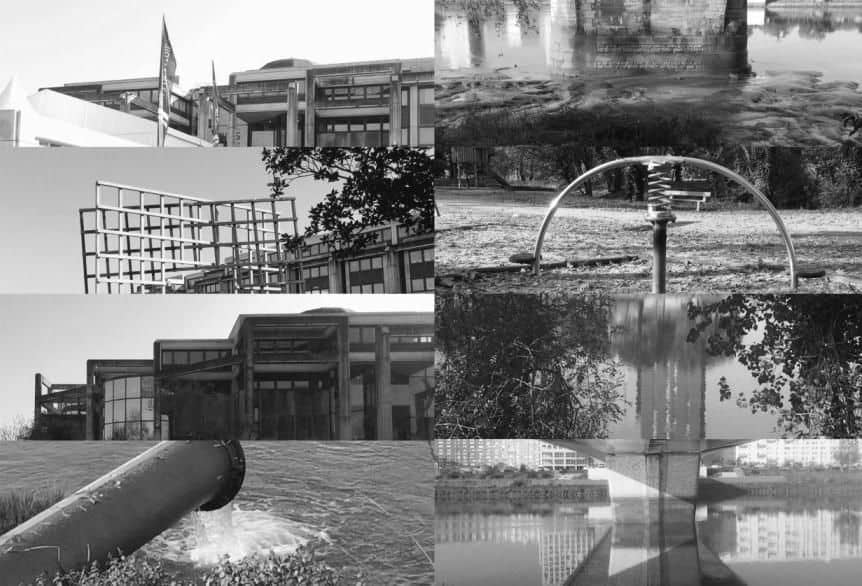
I photographed the sites in Nantes that reflect the values of the city. Then I categorized and edited them to exaggerate the contexts of messages I was going to deliver.
4. Drawing
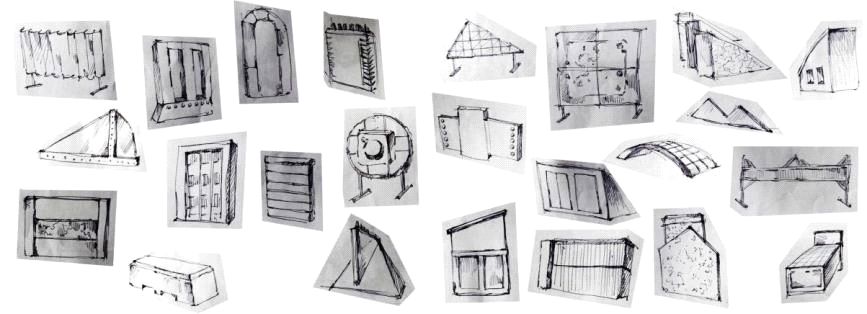
Using the organized photos, I created a drawing series of art objects. Unlike the usual drawing series used as a layout for future detailed drawings, it will serve as an intermediate image that aids brainstorming for creating the art objects through photographs. It will focus on how to make photographs on the plane into art objects. In general, this drawing series will presume that Nantes is a space with a cluster of freestanding walls and use these walls as frame structures.
5. Art Object
Based on the drawing series, I will start working on art objects in the first half of next year.
IV. Results
1. Summary
When some shift manifests as movement or phenomenon – in this specific case, heading towards the future through the tunnel of the end of a century (fin-de-siècle) – it triggers a force that derives a contrasting structure of pleasure and displeasure To make any changes, we need a curiosity accompanied by feelings of dissatisfaction about the present or an expectation for the future. Being aware of this, I spent time guessing what curiousness, derived from pleasure and displeasure, made this city move. I tentatively concluded that unconscious fantasies, the people of Nantes had, were related to surrealism, orientalism, and colonialism, especially considering French history. In the thinking process, I used some landmarks of Nantes for references: the mechanical elephant’s shape, the topography of Nantes, and the characteristics of urban architectural design. I also referred to the slave trade history for background knowledge.
The first landmark I am going to talk about is a mechanical elephant. From my perspective, it has a gloomy mood and grotesque shape. In comparison to an elephant train at Seoul Grand Park in Korea, the Nantes’ elephant had a design that very much looked like a destructive and broken robot in the setting of a realistic city. It reminded me of the Terminator, a cyborg character in a film of the same title, from the future. Just like the mechanical elephant that seemed to come from ruins, Terminator had a dirty rather than modern texture in appearance. Hence, it reminds us of the future vision from the past rather than the future itself. Having only one mechanical elephant in the city also made me feel that Nates treated the elephant as a legendary thing rather than something from the future. It further reminded me of the images of elephants recorded by European artists during the wars in Middle East Asia or Africa. All of these elephants led applause because they were ruins. Personally, comparing Nantes with other cities I had been to before, the topography of the island and water was another factor that highlighted the melancholy of the fin-de-siècle mood of Nantes.
The city of Bilbao, another successful example of urban regeneration, is in Basque Country in northern Spain, which also has a large river and the Guggenheim Museum Bilbao, the city’s important landmark, right next to the river. However, in Bilbao, the river mirrors the appearance of the museum and enhances its dreamy look. Therefore, the river in Bilbao appears less gloomy than the one in Nantes. A small town named Irun tangent to the small sea that runs between France and Spain also has water as a geographical feature. However, water in Irun contributes to vitalizing the region through various arts and culture events that take place on the bridge connecting the sea.
Rotterdam also has a sea and a river nearby. It started as a ruined city and now turned into a representative city with various architectures. Despite deep water adjacent to it, Rotterdam has a pretty lively atmosphere due to urban design emphasizing diverse architectural characteristics. In contrast, Nantes has a relatively small number of regional structures that use water. For example, there is no such a structure designed to give meaning to the bridge entering the island that it creates the symbolic burdens to the visitors that they are entering an isolated space. Moreover, the musty water with a dull color contributed to leaving a dark impression of Nantes. In general, water in Nantes seemed to create the dark side of illusion water could make.
The urban buildings of Nantes seemed to fall into two categories overall: one was the region with old structures restored and maintained, and the other was where the newly designed current buildings were. The old buildings of Nantes looked a little colder and dryer than the ones in other European cities. On the other hand, they appeared less threatening or grave than the ones in Paris. In particular, in Nantes, it was easy to find the building with the entire surface walls finished with grey material. I thought it made the city look like a dry rigid sculpture. Even in new modern constructions, they rarely had curves or fluid and natural structures. Many of them had steel structures with grids and vertical and horizontal shapes that led me to feel a little intimidated and distant. In terms of colors, it was hard to find constructions with warm color combinations. Most of them were colorless or in cold color combinations. Despite the cold color combinations, these modern buildings looked rather heavy and dull because they used few reflective materials. I felt that this sort of mood dominated the whole city in general. On the other hand, although I could not find a trace of it anymore, Nantes used to be the center of more than 48% of the African slave trade in Europe, hence known as a slave port.
For me, Nantes did not seem to have many architectural structures that grieved about this part of history. According to various materials I looked into at the Memorial to the Abolition of Slavery, they treated the history of the slave trade equally as other historical events, regarding it as one of the sorrowful unfortunate events. Having the least architectural structures associated with slave trade history, Nantes seemed passive toward documenting, organizing, and reflecting this history. The slave trade hall in the museum, in particular, did not seem to function as a memorial hall since it displayed various animated videos on Black history, using it merely as a historical topic. I thought it essential for Nantes to remember that the city had once been a grand slave trade center in history and that it should forward to the future always in memory of this part of its history.
Looking around Nantes, focused on a few keywords, I examined what parts of history could the people of Nantes establish the footholds for advancing to the future. From this, I also explored what structures and shapes their fantasies had manifested in reality. It seemed to me, the illusion of the end of a century I had captured in ruins made the people of Nantes believe they transited to the future from the past. The illusion was a little dark and gloomy, yet I guessed it was a motivational force that made a shift in them. For my project, I will focus on the buildings’ exterior designs for references. Based on them, I will create art objects of free-standing walls on the theme of fin-de-siècle.
세기말 통로를 지나 미래로 가는 것
임정수
미술원 조형예술과
낭트시를 방문 및 조사하는 과정을 통해 한 장소를 관찰하고, 발견된 특이점들을 맥락화하여 그 내용을 작업의 소재로 삼아 새로운 작업의 레퍼런스로 활용한다.
낭트라는 도시가 재생 사업을 통해 발전하게 된 원인으로 무의식적으로 내재했을 수 있는 가치관들에 대해 발견하고 정리하여, 그것과 관련된 이미지 레퍼런스들을 도출한다. 이 과정에서 낭트시의 랜드 마크들을 중심으로 연구하며, 개인적인 감상과 비약점인 입장을 이 연구의 주요한 접근 태도로 삼는다. 도출된 이미지 레퍼런스들을 토대로 드로잉 연작을 제작하고, 이를 바탕으로 새로운 오브제 작업을 이어간다.
I. 연구의 목적 및 중요성
낭트시의 현재와 과거를 비교해 생각해보면서, 그곳에서의 시간과 공간이 가지는 의미를 작업에 직접 적용하여 새로운 오브제 작업을 진행하는 것에 목적을 갖는다. 지금까지의 나의 작업은 작업과 인간의 관계를 물성의 표면을 통해 공간에 드러내는 것이었는데, 이때 장소란 나의 몸이 직접 경험한 사건이 있는 곳들을 소재로 삼아왔다. 낭트시를 방문하는 또 하나의 예술가로서, 도시를 관찰하고, 이야기하고 그곳의 상황을 작업으로 풀어냄으로써, 계획되거나, 도면화되거나, 범주화될 수 없는 상황에 대해 드러낼 수 있을 것이다. 이 연구는 예술가와 도시의 만남을 작업의 레퍼런스로 삼음으로써, 낭트를 기반한 작업을 생성하는 것에 의의가 있고, 특정 장소에 집중한 접근 방식을 통해 작업이 이전보다 심화 될 수 있기를 기대한다. 다른 여러 도시와 한국의 상황과 현상을 상대적으로 비교하는 과정을 통해, 자연스럽게 주어진 것들에 대해 반문하고, 질문해 봄으로써, 잘 드러나지 않을 수 있는 한국의 특이점에 대해 생각해 보는 것은 작업이 다음으로 나가기 위한 중요한 발판이 될 것이다. 이 결과물은 한 명의 예술가가 다음 작업을 위한 발판을 마련하는 과정에서 도시의 상황과 현상을 그 레퍼런스로 삼음으로서, 새로운 소재를 작업에 개입하고, 낭트시의 입장에서는 특이점이 있는 관점을 제시하는 점에서 의의가 있다.
II. 연구의 내용 및 범위
이 연구와 드로잉 시리즈는 한 도시 재생 사업이 가능 가능했던 상황과 원인에 대해 추측하면서, “역사적 상황”, “랜드 마크의 모습”, “도시를 구성하는 건축물들의 외형”, “섬과 물이 함께 있는 지리”라는 몇 개의 키워드들을 도출하고 이 부분에 집중하여 사고를 전개한다. 다른 국가와 도시의 상황이나 이미지를 이 연구 과정에서 참고하여, 낭트라는 도시의 특징으로 보이는 부분들을 개인적인 관점과 경험을 바탕으로 과장한다. 낭트라는 도시의 과거가 어떻게 입장이 현재에 수용이 되고, 이러한 방식을 통해 고려하고 있는 미래는 어떤 모습인지에 대한 작업적 맥락을 도출한다. 연구는 낭트라는 도시에서 발견된 상황들에 전제하며, 이것을 최종적으로 드로잉 및 오브제 작업에 반영하는 것까지를 기준으로 삼는다.
III. 연구 방법
1. 조사
1) 낭트 도시 내에 위치한 문화기관들을 방문하여, 담당자들과 이야기를 나누고, 기관에서 정리 및 아카이빙 하는 이미지 자료들을 수집한다.
2) 낭트 시에서 중요한 박물관, 미술관, 갤러리 등 예술과 직접 관련이 있는 아카이빙 장소들을 방문하고, 이 기관들이 어떤 작품을 어떻게 다루는지에 대해 연구한다.
3) 도심의 여러 지역구, 구시가, 습지, 관광지, 주거지 등의 장소를 자전거와 도보의 방식으로 직접 방문하여 도시의 모습과 사람들이 살아가고 있는 상황과 환경을 관찰하고 사진으로 기록한다.
4) 역사 상황을 기록하고 다루는 장소인 노예박물관과 쥘 베른 물관을 방문 및 조사하고, 실제 역사를 도시를 연구하는 기본 자료로 삼는다.
5) 상업과 쇼핑이 발달한 구도심 지역의 도시 구조와 형태를 통해, 도시의 지향점과 특징 및 발달 정도에 대해 발견한다.
6) 도시 내에서 직접 알아볼 수 없는 부분에 대해서는, 인터넷 조사를 통해 도시의 상황과 역사를 알아간다.
7) 도시 재생 사업이 있었던 다른 도시의 예제를 찾아보고, 다른 도시와의 비교를 통해, 낭트만의 특이점이나 중요지점을 발견한다.
8) 다른 국가 및 다른 도시에 위치한 다른 미술 기관 및 레지던스와 낭트의 문화예술 기관의 차이점에 대해 생각해 보는 방법을 통해, 낭트 도시의 문화기관을 통해 이루고자 하는 지향점에 대해 생각한다.
9) 도시의 과거와 현재 지도를 참고하여, 형태적으로 가진 변화에 대해 알아본다.
10) 도시에 위치한 다양한 건축물 사진들을 수집하여, 낭트시가 지향하는 도시의 모습과 형태에 대해 고민한다.
2. 맥락 도출
낭트의 도시 재생 기획이 가능했던 이유에 대해 추측하면서, 역사적 사실, 랜드 마크의 형태, 도시를 이루는 건물들의 외형, 섬이라는 지리적 상황이라는 키워드들에 초점을 두고 생각을 전개해 본다. 타 도시의 상황이나 이미지를 이 과정에서 참고하여, 낭트시의 특이점으로 볼 수 있는 부분들을 부각해, 과거에 대한 낭트시의 입장이 어떻게 현재에 반영이 되고, 이러한 과정을 통해 그리고 있는 미래는 어떤 모습인지에 대한 맥락을 도출해 낸다.
3. 사진 기록
도출된 관점을 토대로 그러한 가치관 및 사고체계가 드러난 도시의 공간들을 직접 촬영하고, 분류화한다. 촬영된 사진들은 의도적으로 부분 편집되어, 이미지의 과장된 편집을 통해 이야기하고자 하는 맥락이 과장되는 과정을 거친다.
4. 드로잉
정리된 사진을 토대로 오브제 드로잉 시리즈를 만든다. 이 드로잉 시리즈는 오브제를 위한 구체적 형태와 도면이라기보다는 사진을 통해 오브제를 생각하기 위한 중간 이미지의 역할을 할 것이다. 어떻게 사진의 평면의 상태의 오브제화되는 것에 초점이 있으며, 가벽이라는 구조물의 형태를 기본 골조로 두고, 낭트라는 도시가 다양한 가벽들이 모여 있는 공간이라는 가정 아래, 드로잉 시리즈가 제작될 것이다.
5. 오브제
제작된 드로잉을 토대로, 그러한 이미지를 바탕으로 한 오브제 작업을 내년 상반기에 진행한다.
IV. 연구 결과
1. 맥락도출 내용요약
세기말 통로를 지나 미래로 가는 것, 어떤 현상이나 움직임이 발생할 때, 그 운동성이 발동하게 하는 곳에는 쾌와 불쾌의 대비되는 구조가 함께 작용하는 힘이 있기 마련이다. 무언가의 변화가 가능하기 위해서는 현재에 대한 불만과 미래에 대한 기대를 동반한 호기심이 필요하기 마련이기에 나는 쾌와 불쾌가 만들어낸 어떤 호기심이 이 도시를 움직이게 하였는지를 추측하는 데 시간을 보냈다. 잠정적으로 내려 본 결론을 정리하자면 낭트에 사는 사람들이 가지고 무의식적인 판타지가 초현실주의와 오리엔탈리즘 및 식민주의와 관련이 있다고 생각하고, 이러한 사조들은 프랑스라는 나라에서 충분히 가능한 내용이라고 생각했다. 이렇게 생각하게 된 배경에는 낭트의 랜드 마크인 “코끼리의 형태”, “섬이라는 지형”, “도시 건축물 디자인의 특징”, “노예무역 역사”를 주요 레퍼런스로 삼았다. 첫 번째로 랜드 마크인 기계 코끼리의 경우 우울하고 그로테스크한 형태를 띠고 있는데, 한국의 서울 대공원 코끼리 열차를 생각해보면, 낭트의 코끼리의 디자인이 현실적인 도시에 파괴적이고 부서진 로봇의 형태를 하고 있음을 비교해서 생각해 볼 수 있다. 이 외형은 미래에서 온 터미네이터를 떠올리게 하는데, 미래에서 온 터미네이터의 디자인 또한 모던함을 추구하기보다 더러운 질감을 지향함으로써 여전히 과거에 기저를 두고 있는 미래상에 대해 떠올리게 한다. 그래서 이 코끼리는 사실상 폐허에서 온 것 같은 느낌을 주는데, 단 하나의 코끼리가 운영된다는 사실을 통해, 코끼리를 전설적 대상으로 다루는 시스템을 운영함으로써, 미래적이라 보다는, 전설 속에 있는 느낌을 준다. 이러한 폐허로서의 아름다움을 기 대받는 외형은 최종적으로 유럽 미술가들이 기록한 중동 아시아 및 아프리카에서 발견된 전쟁 속의 코끼리의 모습을 떠오르게 한다. 개인적으로 이전에 경험한 다른 도시들과 고민했을 때, 섬과 물이라는 지형은 낭트의 세기말적 우울함을 과장 하는 또 하나의 요소이다.
도시재생의 성공사례로 불리는 또 다른 도시인 빌바오의 경우, 스페인 북부 지역 바스크 시에 있는데, 이 도시 역시 큰 강을 끼고 있고, 중요한 랜드 마크인 빌바오 구겐하임 미술관이 강 바로 옆에 있다. 그렇지만 강의 거울 역할을 통해 미술관의 모습을 조금 더 몽환적으로 과장해주는 역할을 하며, 낭트의 도시처럼, 강이 보여주는 환상적인 우울함은 좀 덜하다고 보이는 도시이다. 프랑스와 스페인 사이에 흐르는 작은 바다를 끼고 있는 ‘이룬’이라는 도시 또한, 물이라는 지리적 요소를 가지고 있지만, 이 바다를 잇는 다리 위에서 일어나는 여러 가지 예술 문화 행사를 통해 지역의 활성화에 일조하고 있다.
로테르담 또한 근처에 바다와 강을 끼고 있고, 폐허 된 도시에서 시작하여 지금은 여러 건축물의 선보여지는 대표적인 도시로서 위치하였는데, 각각의 건축의 특성과 개성을 강조한 도시 디자인 덕에 깊은 물이 주는 두려움과 별개로 꽤 발랄한 분위기를 유지하고 있는 도시로 보인다. 상대적으로 낭트는 물을 활용한 지역적 구조가 적을뿐더러, 섬으로 들어가는 다리에 의미를 부여하거나, 특별히 디자인된 구조가 없기 때문에, 고립된 공간으로 들어간다는 상징적 부담감을 남기는 것 같다. 또한, 퀴퀴하고 어두운 수질이 낭트에 대한 인상을 결정하는 데 중요한 몫을 하여, 물이 만들어 낼 수 있는 환상감 중에 조금 어두운 부분으로서의 환영을 남기는 듯하다.
낭트 시에서 발견되는 되는 도시 건축물들은 크게 두 가지로 나뉘는 것으로 보이는데, 하나는 구시가 이제 있는 오래된 건물들을 비롯하여 오래된 구조물을 복원하여 유지하는 부분과 새롭게 디자인된 현재 건축이 발견되는 부분이다. 오래된 건물들의 경우 다른 유럽의 도시에서 보이는 외형 양식보다 조금 차갑고 건조한 편이며, 파리보다 위협감이나 중후한 느낌 이 덜하다고 보인다. 특히 주로 옆면을 회색 재료로 통째 마감하는 방식이 자주 보이는데, 이러한 부분이 도시를 건조하고 단단한 조각처럼 보이게 만든다고 생각하였다. 새로운 현대 건축 양식들에도 주로 곡선 및 유동적이고 자연스러운 형태가 적고, 그리드와 수직 수평에 기반을 둔 철골 구조가 포함된 형태들이 많은데, 아기자기하고 세심한 느낌보다는 이 역시 조금 위협적이고 낯을 가리는 감상을 준다. 색도 도시에는 꽤 난색 계열 조합의 구조물과 건축물을 발견하기 힘들고, 무채색이거나, 한색 계열의 조합을 통해 이미지를 표현하는 것 같다. 건조한 감성을 지향하지만, 반사체 위주의 재료들이 드물어서, 현대 건축물임에도 불구하고 좀 무겁고 둔한 느낌을 주는데, 이러한 감수성이 도시 전반을 지배하는 가장 중요한 가치관인 것으로 보였다.
낭트 도시에서 직접 발견되지는 않았지만, 낭트는 유럽에서 이루어졌던 아프리카 노예무역의 48% 이상을 차지했던 도시로서, 노예 항구와 마찬가지였던 도시로 알려졌는데, 이러한 역사가 있는 것에 비해서, 그들이 이러한 역사를 기억하고 추모하는 행태는 많이 발견되지는 않았던 것 같다. 낭트 국립 박물관에 있는 여러 자료를 살펴보았을 때, 박물관은 노예무역의 역사를 다른 역사적 사건들과 동등하게 비중으로 두어 한때 있었던 잘못되고 슬픈 일 정도로 다루고 있다고 보이고, 노예박물관 또한 최소한의 구조물만 있었을 뿐, 기록을 정리하고 반성하는 것에 대해 소극적으로 보였다. 특히 국립박물관의 노예무역관은 추모관이 아닌 흑인의 역사를 또 하나의 소재로 사용한 장소로 보이는 여러 영상 애니메이션들이 있었는데, 낭트라는 도시가 매우 큰 노예무역 도시였었던 것을 잊지 않고, 그러한 역사를 고려해가며 도시를 미래로 나아가게 하도록 해야 한다고 생각했다.
낭트라는 도시를 경험하면서 이곳의 사람들이 미래를 향해 도약(비약) 가능한 과거로서의 발판은 무엇인가를 몇 가지 키워드 속에서 살펴보며, 어떠한 구조 속에서 판타지가 현실에 작용하였는지 살펴보고 있다. 폐허 속에서 발견되는 세기말적인 환상이 과거를 미래로 이동시킨다고 생각하고, 한편으로는 조금 어둡게 느껴지는 감수성이 결국은 이들을 움직였을 것으로 추측하고 있다. 나는 특히 작업의 소재로서 건축물의 겉면 디자인에 더 집중할 것이며, 이러한 레퍼런스를 바탕으로 세기말 가벽 오브제를 만드는 일을 준비해볼 것이다.