HOW NANTES, A CITY OF ART-CULTURAL EXCHANGES, INTERACTS WITH PEOPLE – LEE JAE-HONG
Lee Jae-hong
Department of Design
Nantes aims to revive itself as a city through exchanges of art-cultural industries. The success of a mechanical elephant attracted more than a million visitors are visiting Nantes annually. Then is Nantes genuinely the site of art-cultural exchanges to those who visit the city?
By studying an interface named “green way,” this research seeks how Nantes interacts with people. Also, it explores what types of experiences it offers to people through interviews, observations, and analyses to find out how a designer can contribute to urban regeneration.
I. Objective
Urban regeneration is one of many various essential assignments we, humankind, currently are facing upfront. As time passes by, the flagship industries change, and the cities that fail to catch up with the flow of industrial changes are naturally selected. The more closely a city was involved in the previous industry, the greater the impact is by industrial changes. A good example is Detroit in the United States. Detroit, a city that used to thrive as the center of the auto industry, once led the economy of the Eastern U.S. However, the industry went into a decline facing various circumstances, and the city filed for bankruptcy in the end. The most population left the city, and the city became the nation’s most crime-ridden area filled with empty buildings in the center. In Korea, Geoje, Tongyeong, or Ulsan that flourished with the shipbuilding industry, or Daegu that led the textile industry is now in a similar situation. As more and more young generation leave these cities, the topic of urban renewal has become an assignment that we must ponder.
Many evaluate Nantes urban regeneration as an example of a successful case. Therefore, by studying Nantes, I tried to interpret urban planning as a student of interaction-design major. From there, I also sought how a designer could contribute to urban development.
II. Extent of the Research
As mentioned earlier, Nantes historically went through a similar process as Detroit. In the past, as Nantes gained a reputation as the best shipbuilding industrial complex in France, many people who came to find a job flocked to it, and various cultures and commercial districts began to revitalize. However, as the shipbuilding industry gradually pushed back to other countries, it went through the process of closing. As the core industry of the city collapsed in an instant, it suffered a period of confusion. There were seven thousand unemployed people, and schools were closed. Today, however, Nantes is seen as a successful example of urban regeneration, ranking again as the 5th best place to live in France.
Nantes chose the culture and art industry as the core industry after the shipbuilding industry. They tried to make Nantes a city of exchange by utilizing culture and arts, as in the past. Therefore, the works of many artists and famous architects and various cultural and artistic facilities – various exhibition halls, museums, art schools, architecture schools, courts, music bunkers, the museum of Twenty Thousand Leagues under the Sea, slave trade memorial halls, natural history museums, art galleries, and various artist residences – entered. They tried to revitalize the culture and art industry centering on the former shipyard site, Ile de Nantes, that various works and facilities indeed settled in this area.
However, these things were not enough to attract people to Nantes. The mechanical elephant project, implemented afterward, solved this problem at once. Nowadays, more than one million people visit Nantes a year to try riding and seeing the large steampunk mechanical elephant. These one million people have become the driving force of Nantes' culture and art industry, turning Nantes back into a city of exchange again.
I define urban renewal as to energize a city – that is, to make it breathe again if it stopped breathing, and to refill vitality if it had weak breath. When I was experiencing Nantes, I questioned whether the vision Nantes had set up was progressing as planned. In other words, I wondered if one million visitors of Nantes indeed experienced the city as the site of exchange of culture and art. Therefore, I investigated and analyzed how Nantes was currently interacting with those one million people.
III. Research Methods
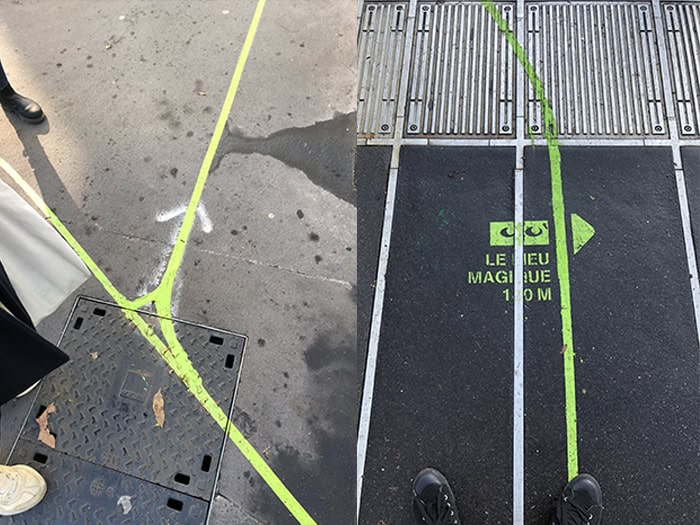
The green way in Nantes is a pathway painted green that serves as an interface and tour guide for its one million visitors. The green way on the road leads people to experience the city as the site of art-cultural exchange.
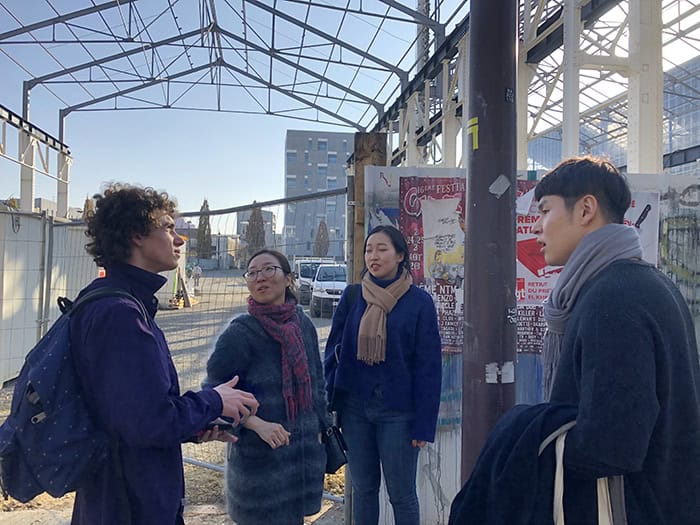
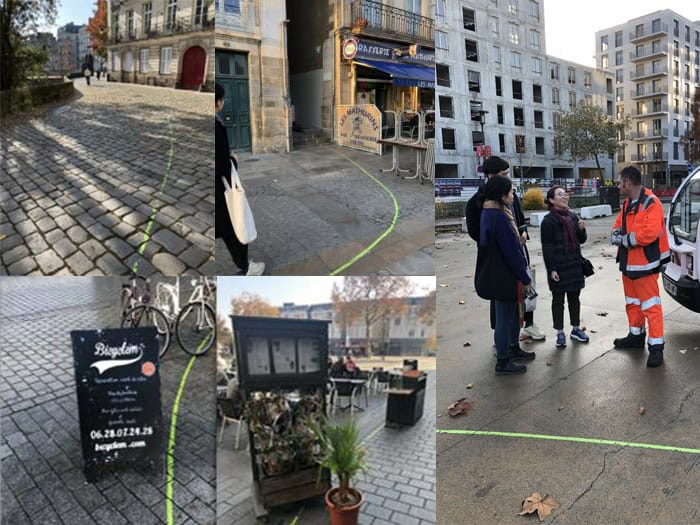
As I walked along the green way, I classified the region with these routes into two parts, the old town, and the Ile de Nantes. Then I interviewed the locals and visitors while cross analyzing these spaces.
IV. Results
First and foremost, the green way is not an interface designed to move quickly through points. The green way leads people to the streets, sometimes to the main roads, and sometimes to the alleys, inviting people to experience Nantes as it is. By following the green way, visitors of Nantes do not need to rely on Google Maps or the map as they do in other cities. I captured, with their view released from their fingertips, people could enjoy richer experiences.
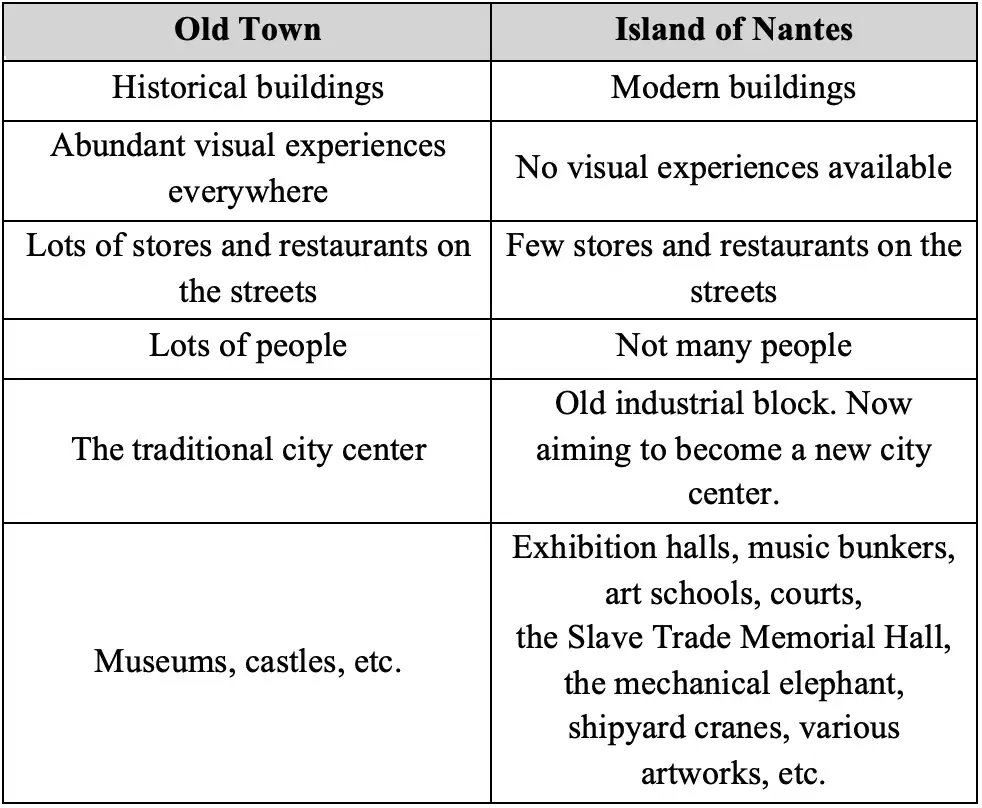
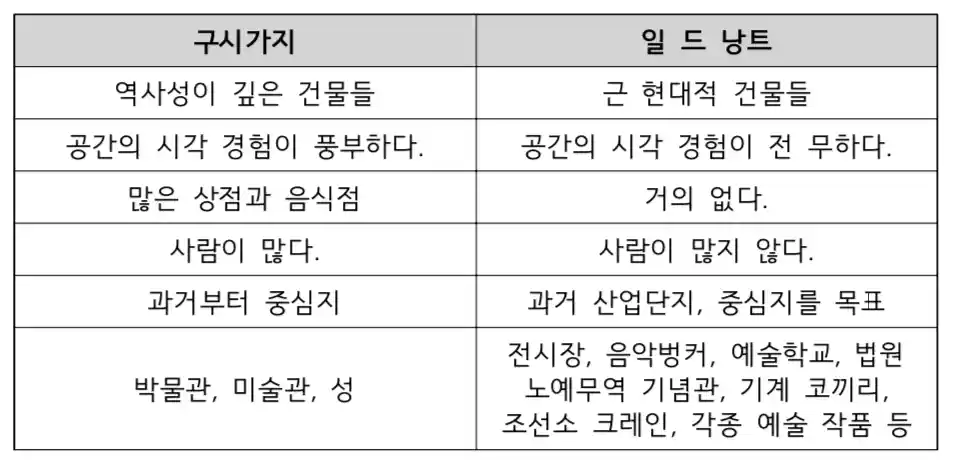
To investigate and analyze whether one million people are experiencing Nantes as a city of culture, art, and exchange, I classified and cross-analyzed the areas with the green way as in the following:
Above all, the old town was abundant with visual experiences while it was easy to contact many commercial districts. The green way grasped visitors with eye-shaped affordances on the streets or crossroads. Also, local restaurants attracted customers, displaying menu boards near the green way. I could see how the old town interacted with outsiders through the green way.
It was different on Ile de Nantes, however. Modern buildings found everywhere created boring experiences rather than new ones. The visitors walked the streets, looking down on the ground because the green way blocked their sights. In this case, the green way was more like smartphones that limit people's views. Due to the expectation that following the green way would be fun, I continued to walk along the way, but in the end, I was only embarrassed to discover there was nothing memorable.
Ironically, all art-cultural platforms exist on Ile de Nantes. It would be inaccurate to say there was no platform for people to experience on the Island of Nantes. However, my interviewees said they recalled nothing memorable from there. Why is it so?
Drawing an experience curve based on the analysis gave me an insight that the experiences in the old town accumulated. In contrast, those in the areas of the Island of Nantes were interrupted. The reason behind this was, there was rarely anything to experience while transferring from one platform to another. Through investigation and analysis, I arrived at the most basic question. What can one million visitors of the Island of Nantes experience? Number one million has significance only when the city provides them experiences good enough to make them re-visit the place again later. Nevertheless, Nantes did not have such experiences to offer.
How should the green way of the Island of Nantes develop in the future, and how should urban regeneration proceed around this interface? As a city of culture, art, and exchange, what contents and experiences should Nantes develop and provide? These questions are the tasks I found for designers.
문화·예술 교류의 도시로써 낭트가 사람들과 인터랙션(상호소통) 하는 방법에 관하여
이재홍
미술원 디자인과
'그린 웨이’라는 인터페이스를 통해 어떻게 낭트와 사람들이 상호작용(인터랙션)하는지 또, 어떤 경험을 하고 있는지 인터뷰와 관찰, 분석해 봄으로써 디자이너가 도시 재생에 어떻게 관여할 수 있는지에 대한 가능성을 찾아보았다.
I. 연구의 목적 및 중요성
도시 재생은 현재 우리 인류가 당면하고 있는, 그리고 앞으로 필연적으로 당면해야 할 크고 작은 다양한 과제 중 하나이다. 시대가 흘러감에 따라 그 시대를 지배하던 중심 산업이 변화하게 되고 이에 따라가지 못하는 도시들은 자연스럽게 도태되기 마련이다. 특히 이는 그전 시대의 산업에 깊게 관여한 도시일수록 여파가 크게 나타나는 데 좋은 예로 미국의 디트로이트가 있다. 디트로이트는 자동차 산업이 크게 발전한 도시로 한때 미 동부의 경제를 책임지던 요충지였으나 여러 가지 문제로 산업이 몰락한 후 도시는 파산신청을 하고 인구 대부분이 빠져나가 중심지에 빈 빌딩이 즐비한 미국 제1의 범죄 도시가 되었다. 한국도 거제나 통영, 울산 등 조선 산업이 호황을 이루었던 도시나 대구와 같은 섬유 산업이 호황을 이루었던 도시가 현시대에 들어 점차 젊은 계층이 빠져나가는 것으로 보아 도시 재생이란 우리가 이제 꼭 생각해야 할 과제와 같은 것이 되었다.
낭트는 도시재생에서도 굉장히 성공적인 사례로 꼽힌다. 따라서 나는 낭트를 실제로 경험하면서 인터랙션 디자인 전공자로서 도시재생을 어떻게 해석할 것인지 또 디자이너가 어떻게 이에 기여할 수 있을지에 대한 가능성을 찾으려 하였다.
II. 연구의 내용 및 범위
앞서 언급한 것처럼 낭트는 디트로이트와 비슷한 순서를 겪었다. 과거 낭트가 프랑스 최고의 조선 산업단지로 명망이 높아지자 일자리를 구해서 찾아온 사람들이 몰리게 되고 각종 문화와 상권 등이 부흥하기 시작했다. 하지만 타국에 점차 조선 산업이 밀리게 되면서 폐쇄 순서를 밟았고 한순간에 도시의 중심산업이 붕괴하면서 이는 7천 명의 실업자의 탄생과 학교가 폐쇄되는 등 혼란의 시기를 겪었다. 하지만 현재 낭트는 프랑스에서 살기 좋은 도시 5위에 다시 매겨지는 등 성공적인 도시재생의 사례로 꼽힌다.
낭트시가 조선 산업 다음의 중심산업으로 선택한 것은 문화·예술 산업이었다. 이들은 과거 낭트가 그러했듯 낭트를 문화, 예술을 활용하여 교류의 도시로 만들고자 했다. 따라서 많은 예술가와 유명한 건축가의 작품과 다양한 문화·예술 시설들(각종 전시장, 박물관, 예술학교, 건축학교, 법원, 음악 벙커, 해저 2만리 박물관, 노예무역 기념관, 자연사 박물관, 미술관, 각종 예술가 레지던스)이 들어섰다. 이들은 과거 조선소 부지였던 ‘일 드 낭트(Ile de Nantes)’를 중심으로 문화·예술 산업을 부흥시키려 했으며 때문에 다양한 작품과 시설들이 실제로 ‘일 드 낭트’를 기점으로 포진되어 있음을 확인할 수 있었다.
하지만 이런 것들은 사람들을 낭트로 끌어들일 만한 매력이 충분하지 않았다. 후에 시행된 ‘기계 코끼리’ 사업은 이런 문제점을 단번에 해결해 주었다. 커다란 ‘스팀펑크’적인 ‘기계 코끼리’를 타보고 구경 할 수 있다는 점 때문에 연간 100만 명 이상이 낭트를 찾게 되었고 이 100만 명이 낭트의 문화·예술 산업의 원동력이 되어 다시 낭트를 교류의 도시로 이끌어 줄 가능성을 보여줬기 때문이다.
도시 재생을 나는 다시 활력있게 도시를 만드는 것으로 정의하였다. 숨이 멈췄으면 다시 쉬게 만들고 약하게 쉬고 있으면 더 활력있게 쉬도록 만드는 것으로 생각했다. 또, 나는 실제로 낭트를 경험하면서 낭트가 현재 세운 비전이 제대로 진행되고 있는가에 대해서 의문을 가지게 되었다. 다시 정리하자면 100만 명 이 낭트에 와서 낭트를 교류의 도시, 문화·예술의 도시로 경험하고 있는가에 대한 의문이었다. 따라서 현재 낭트가 100만 명과 어떻게 상호작용하고 있는가를 조사하고 분석해보았다.
III. 연구 방법
낭트에 있는 ‘그린 웨이’는 하나의 투어 가이드로서 낭트를 찾은 100만 명이 낭트를 문화·예술 그리고 교류의 도시로 느끼게 안내자 역할을 하는 길에 그어진 녹색 페인트 라인이자 인터페이스이다. 나는 이 경로를 따라 걸으면서 경로가 그어진 구역을 두 가지, 구시가지와 일 드 낭트로 분류하고 공간을 교차 분석하면서 현지인과 외지인을 인터뷰했다.
IV. 연구 결과
우선 ‘그린 웨이’는 지점을 빠르게 이동하기 위해 만들어진 인터페이스가 아니다. ‘그린 웨이'는 때로는 큰길로 그리고 때로는 골목길로 사람들을 인도하면서 낭트를 있는 그대로 느끼게 유도한다. '그린 웨이'를 따라가면 되기 때문에 사람들은 타 도시에서처럼 구글 맵을 실행하거나 지도를 보면서 걷지 않아도 되고 손끝에서 시야가 해방되어 좀 더 풍부한 경험을 하는 것을 포착할 수 있었다.
나는 100만 명이 낭트를 문화·예술 그리고 교류의 도시로 경험하고 있는가를 조사, 분석하기 위해 다음과 같이 그린 웨이가 그어진 구역을 두 가지로 분류하여 교차 분석하였다.
하지만 ‘일 드 낭트’에서는 그렇지 않았다. 어디에서나 볼 수 있는 현대적 건물은 새로움을 주기보다는 지루한 경험을 주었고 다시 한 번 스마트폰에 시야가 갇히듯 ‘그린 웨이’라는 인터페이스에 시야가 갇혀 땅을 보고 걷게 되는 현상이 나타났다. ‘그린 웨이’만 따라가면 재미있을 것이란 기대감이 사라지지 않았기 때문에 계속해서 걷게는 되지만 결국 기억에 남는 경험조차 없을 정도로 당황스러웠다.
하지만 자세히 들여다보면 사실 문화·예술의 플랫폼들은 모두 ‘일 드 낭트’에 존재하고 있다. 사람들은 그 플랫폼을 ‘일 드 낭 트’에서 경험하지 못한 것이 아니다. 하지만 그들은 ‘일 드 낭트’ 에서 어떠한 기억에 남는 경험을 하지 못했다고 하였다. 왜 그런 현상이 일어나는 것일까?
분석 결과를 경험 곡선을 그려보면 구시가지에서는 끊임없이 계속해서 경험들이 쌓이고 있었으나 ‘일 드 낭트’ 지역에서는 경험 이 단절되는 양상을 볼 수 있다. 문화·예술의 플랫폼 사이를 이동하면서 사람들이 경험할 수 있는 요소가 거의 없었기 때문이라고 말할 수 있다. 조사와 분석을 통해 우리는 100만 명은 ‘일 드 낭트’에서 무엇을 경험해야 하는가? 라는 원초적인 질문에 다다를 수 있다. 100만 명 그리고 그 이상의 사람이 찾게 되더라도 그들에게 좋은 경험을 제공하여 또다시 낭트를 찾게 만들어야 하는데 어떠한 경험도 낭트는 제공하고 있지 못하였다.
‘일 드 낭트’의 ‘그린 웨이’는 향후 어떻게 발전되어야 하며 이 인터페이스를 중심으로 어떻게 도시 재생이 이루어져야 하는가? 문화·예술, 교류의 도시로서 낭트는 어떤 콘텐츠를 개발하고 어떤 경험을 어떻게 그들에게 제공해야 하는가? 하는 디자이너가 다룰 수 있는 다양한 과제가 존재한다는 점을 발견할 수 있었다.