Ko Eun-bin
Department of Art Theory
Department of Art Theory
We can trace back two hundred years to talk about the art history of the Loire River. And it is as long as the history of the Loire itself. The 19th-20th century paintings displayed in the municipal art museum exclude the history of the slave trade ship or the appearance of a polluted river. Similarly, modern installation works have become means to embrace citizens near the river by creating it as a beautiful and comfortable living site. Besides, some artworks cast a skeptical view on humans and the history that has continued around the Loire River. This study attempts to understand the history and trends of art on the Island of Nantes by analyzing artworks associated with the Loire. Furthermore, through my perspective on this, I will derive implications for the art of the Island of Nantes.
I. Objective
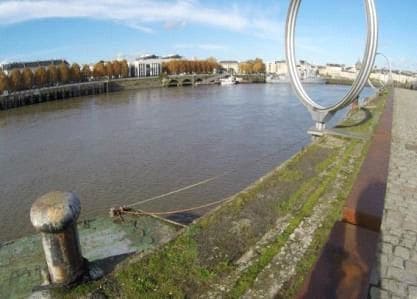
Talking about the Nantes’ history and present, we should also mention the Loire River, the river that flows around Nantes and crosses the Saint-Nazaire region to the estuary. The Loire was a popular subject for painting in the 19th and 20th centuries. In this period, the river often appeared in historical or landscape paintings of Nantes. Even today, we can tell from the recent three exhibitions of Estuary that Nantes is still actively using the Loire to identify the Island of Nantes as a contemporary art space. For these reasons, I expect to grasp an insight into the topography of art about the Island of Nantes that encompasses all historical periods – past, present, future – by studying artworks centered on the Loire.
II. Extent of the Research
The scope of this research extends to the Nantes’ historical and landscape paintings of the 19th-20th centuries, contemporary public installation works, and artists’ activities centered on the river.
III. Research Methods
I have done the fieldwork of Nantes to appreciate artworks of the city. I also investigated additional images and information related to the research topic in this process.
IV. Results
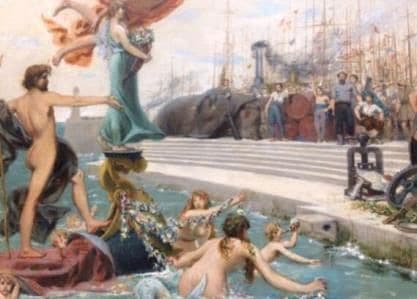
The paintings by painters like Pierre Emile Cornillier or Jules Elie Delaunay, exhibited in the Nantes municipal art gallery, beautifully depict the Loire River of the 19th and 20th centuries. These paintings used vivid colors or introduced mythical characters to describe the splendid scenery of the river. However, they do not reflect the history of slave trade ships or river pollution caused by the shipbuilding industry.
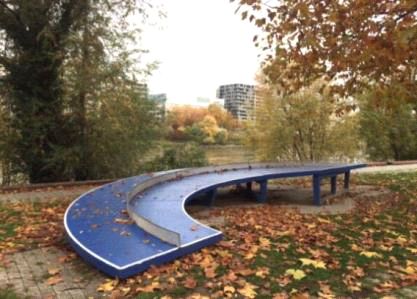
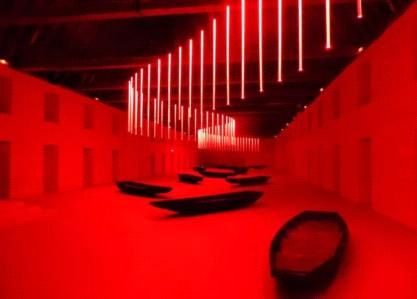
Nantes of today promotes urban regeneration policies focused on culture and arts. Actively utilizing the Loire River is a part of them to establish the artistic identity of the city. A representative example of this was the Biennale Estuaire that was held three times from 2007 to 2012. The city installed the public artworks around the Loire during these three exhibitions. Some of the installations permanently remained there even after the events. Many of these works employed the elements that reflect or emphasize the properties of water or river. Compared to the paintings from the old days, modern artists more dynamically express their views on the Loire in their artworks. However, the city organizes the events that the biennale exhibitions focus on depicting the comfortable and beautiful images of the Loire as the ideal living site.
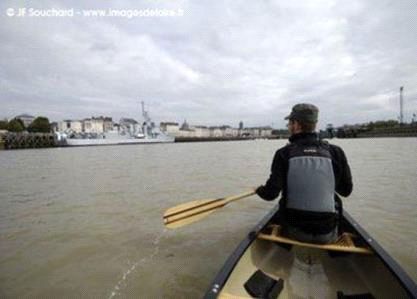
In contrast, in the individual artworks by artists besides the Estoire Project, critical perspectives are more emphasized.
Up to here is the content I reported at the workshop in Nantes. As this study touches on many works, more in-depth research on individual artworks and authors will be needed. Based on the analysis through additional data research, I will reveal the relationship and meaning of individual works related to Nantes’ history and environment.
고은빈
미술원 미술이론과
미술원 미술이론과
루아르 강의 역사가 오랜 만큼 루아르 강에 관련된 미술의 역사 역시 지금으로부터 약 200여 년을 거슬러 올라갈 수 있다. 시립 미술관에 전시된 19-20세기의 회화작품에서는 노예무역선의 역사 또는 오염된 강의 모습이 배제되어 있다. 이와 유사하게 현대의 설치 작품은 강을 아름답고 편안한 생활의 터전으로 시민들을 포섭하기 위한 장치가 되고 있는데, 한편 일부 작품에서는 루아르 강을 중심으로 이어져 오고 있는 역사와 인간에 대한 회의적 시각을 표출한다. 본 연구에서는 루아르 강을 중심으로 하는 미술작품의 분석을 통해 낭트 섬의 미술 역사 및 동향을 파악하고자 한다. 나아가 이에 대한 필자의 관점을 거쳐 낭트 섬의 미술에 대한 시사점을 도출한다.
I. 연구의 목적 및 중요성
낭트 섬의 역사와 현재를 말할 때 빠뜨릴 수 없는 것은 낭트를 휘감아 흐르고 있으며 생·나제르 지역을 가로질러 하구에까지 이르는 루아르 강일 것이다. 루아르 강은 19-20세기 낭트의 역사화와 풍경화에 등장하는 요소였으며, 현대의 낭트 시 역시 루아르 강을 현대미술공간으로서의 낭트 섬 정체화에 적극적으로 활용하려고 하고 있음을 최근에 열린 세 번의 전시 《하구》를 통해 추측할 수 있다. 따라서 루아르 강을 중심으로 하는 미술 작품의 연구가 과거, 현재, 미래를 통틀어 낭트 섬의 미술 지형을 파악할 수 있는 의미 있는 시도가 될 것이라 생각했다.
II. 연구의 내용과 범위
19~20세기 낭트의 역사화와 풍경화, 현대의 공공 설치 작품과 강을 중심으로 펼쳐지는 예술가들의 활동
III. 연구 방법
낭트시 현장 관찰을 통한 작품의 감상과 이해, 추가적 이미지와 정보 조사를 통한 작품의 의미 분석
IV. 연구 결과
낭트시의 시립 미술관에 전시된 Pierre Emile Cornillier, Jules Elie Delaunay 등의 화가가 그린 회화작품에서는 19~20세기 루아르 강의 풍경이 밝은 색채를 사용하거나 신화적 인물을 등장시킴으로써 아름답게 묘사되고 있는 한편, 노예 무역선과 조선업으로 인한 강의 오염 등은 배제되어 있다.
현대의 낭트시 역시 문화예술을 중심으로 하는 도시재생 정책을 추진하며 낭트시의 예술적 정체성 수립에 있어 루아르 강을 적극적으로 활용하고 있다. 이에 관한 대표적 기획이 2007년부터 2012년까지 세 번에 걸쳐 열린 비엔날레 하구(Estuaire)일 것이다. 세 번의 전시 동안 공공미술 작품들은 강 주변에 설치되었으며 전시가 끝난 후 일부 작품은 영구설치 되었다. 다수의 작품에서는 물과 강의 속성을 반영하거나 강조한 듯한 요소가 적용되었다. 현대의 설치 작품들은 과거의 회화 작품들보다 강에 대한 작가의 관점이 더 역동적으로 나타나고 있으나 작품들은 시의 주최로 열린 행사라는 점에서 강을 편안하고 아름다운 생활의 터전으로 포섭하는 데 집중한다. 한편, ‘에스투애르 프로젝트’ 외에도 루아르 강을 중심으로 하는 개별 예술가들의 활동에서는 비엔날레의 목적으로 설치된 공공설치작품보다 더 비판적 시각이 강조되고 있다.
여기까지가 낭트 현지 워크숍에서 보고한 내용이며, 본 연구가 다수의 작품을 포섭하고 있는 만큼 개별 작품과 작가에 대해 더욱 깊이 있는 연구가 필요하다고 생각한다. 추가적 자료 조사를 통한 작품 분석을 통해 개별 작품이 낭트의 역사 및 환경과 지니는 관계와 의미를 보다 자세히 밝히고자 한다.