Song Soo-in
Department of Fine Arts
Department of Fine Arts
∘ CHAPTER 1.
– To read a city with the similarity of triangular structures.
The visual similarity of the triangular structures penetrates the historical significance of the factory into the Nantes city.
∘ CHAPTER 2.
– To read that the distribution of steel frame structures has dismantled the meaning of factory.
The steel frame transforms from a symbolic system into a distributed image of the city.
∘ CHAPTER 3.
– To read how the image of steel frame expresses the identity of the Nantes city.
The distributed steel frames create a faint visual link and loosely weaves the sporadic images that the city exposes in the present.
I. Objective
While the images of a city are exposed and transmitted to the external world under urban development, the edited images own their validity. Throughout this research, I will try adding my private notes to the grain of those images. It is a process of compiling and talking about the city images in a new light instead of editing and seeing them from far off under some purpose. This work aims to create a different context for a city. The city images can vary and have different interpretations depending on how they are re-constructed by an observer, each of who is an individual stranger. Overall, this paper will explore how the images interpret and compose urban spatiality and historicity.
II. Extent of the Research
1. CHAPTER 1
To read a city with the similarity of triangular structures.
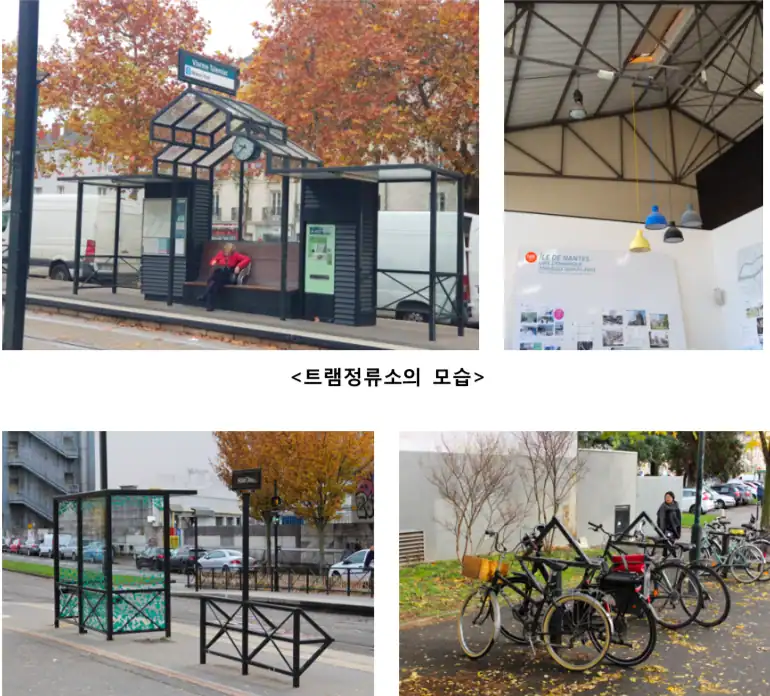
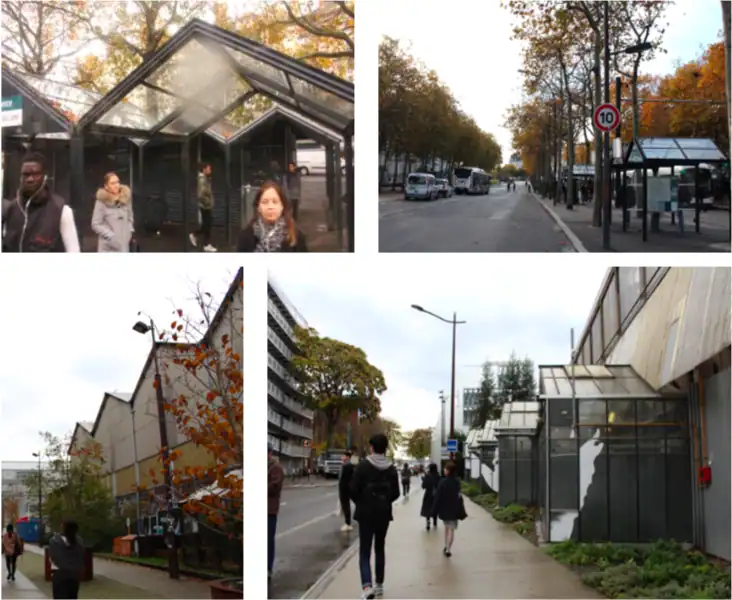
The first area I observed in Nantes was Ile de Nantes, the district where the urban project was actively taking place. When I conducted the preliminary research on Nantes, I learned the motto behind the urban project and architecture. It was to utilize the structure of old factory buildings so that there would be an integration of history and memories about Nantes. Concisely, to me, a steel structure with a triangular roof seemed to symbolize that motto. From my experience, it was hard to tell which one of the buildings was the actual outcome of the urban planning or new construction that imitated the appearance of the old factory at first sight. There was no exception to this, including the elephant house, the elephant museum, the university district, etc. The Nantes’ urban project had already completed building authenticity in the new city from the planning stage. From their appearances, it was hard to distinguish new buildings from old historical ones. The tram stops (photo 1) present everywhere in Nantes were one of the examples. The tram roofs seemingly alike in the Island of Nantes and the old city center created the continuity between the two places. This shape repeatedly appeared throughout the city center to the periphery. This scenery continued throughout the city center to the periphery.
2. CHAPTER 2
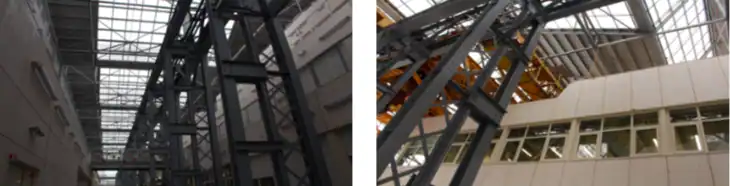
To read that the distribution of steel frame structures has dismantled the meaning of factory. The discovery of the tram stop was the beginning of the observation. Its appearance seemed to resemble the symbolic shape corresponding to the motto of the urban project. Steel structures in similar shapes I found from time to time ever since all had symbolically different depths. The repeated appearances of all roof-shaped architectures had the hidden information – that is, the time or purposes of their constructions. The repetitive images are not enough to reveal such information. Sometimes, only the superficial appearance remains while appeal within an individual image gets erased. Spread all over the city, these shallow images dwindled the causality of symbols in architecture and even neutralized the symbolism. In the meantime, they seemed to form a weak visual link throughout the city with their repetition.
3. CHAPTER 3
To read how the image of steel frame expresses the identity of the Nantes city.
In 2018, the year we visited Nantes, the city was in the middle of urban development by SAMOA. Hence, we could witness the progress of urban development. The areas that were still under development or already completed coexisted. Interestingly, the historicity of the port city revealed itself through entangled scattered images under urban development. Separate from the memories and symbolic systems of cranes along the river or buildings of steel mills, they were all over the city. The scattered images of steel frames caused cracks in the perfect looking of Nantes edited into a whole one image. Observing a city is finding unintended and inevitable links between the presented images and the captured images. And I am trying to talk about Nantes from this approach.
III. Research Methods
I divided the city into three sectors for observation and photographing. They were first, the old city center, second, the Island of Nantes, and third, planned development areas. In the old downtown, French style of architecture looking familiar lined up along the uneven ground with estuaries filled up. On the Island of Nantes, I could see that buildings made of poly, glass, or steel were under construction in a row. Lastly, the cranes standing tall along the riverside seemed to announce the city was currently under urban development. The yellow and grey large cranes, the iconic images of Nantes, tangled together and created a single landscape. At first, I focused on photo-shooting factory buildings. Later, as I began organizing photos by sector, I collected images based on their symbolic system and distribution within the city.
IV. Results
I will propose a triangular steel structure as a symbolic image of Nantes since I consider it bears the city’s identity. Starting from the context of images used to introduce Nantes, I will first inspect them and then record how I re-edit them in my ways. It attempts to interpret and discuss a city by focusing on its present moment that encompasses both past and future.
송수인
미술원 조형예술과
미술원 조형예술과
∘ CHAPTER 1.
– 삼각 구조의 유사성으로 도시를 읽는다.
: 삼각 구조물의 시각적 유사성은 ‘공장’의 역사성을 도시 전체에 이미지로 침투시킨다.
∘ CHAPTER 2.
– 철골 구조물의 분포가 ‘공장’이라는 의미 구조를 해체했음을 읽는다.
: 철골은 상징체계에서 도시의 분포된 이미지로 전환된다.
∘ CHAPTER 3.
– 철골(STEEL)의 이미지가 낭트라는 도시의 ‘identity’로 발현될 수 있음을 읽는다.
: 분포된 철골(STEEL)은 미약한 시각적 연결고리를 만들어 도시의 현재가 노출하는 산발적인 이미지를 느슨하게 엮어준다.
I. 연구의 목적 및 중요성
: 한 도시의 모습이 ‘도시개발’이라는 이름으로 외부에 노출되고 전달되는 과정에서, 편집된 이미지들이 작동하고 있다. 편집된 사진들은 스스로 자신들이 찍히는 타당성을 품고 있다. 나는 그 결 안에 사적인 들여쓰기를 시도해본다. 이는 한 도시의 모습을 목적 아래에 편집하고 관망하는 대신에 도시를 새로운 이미지로 꾸리고 이야기해봄으로써 진정한 ‘도시의 모습’에 대해 다른 맥락을 만들어 내보기 위함이다. 관찰자가 이방인인 개인이기에 할 수 있는 이러한 분석들은 한 도시의 이미지를 어떻게 구성하는지에 따라 이 도시의 현재는 새로운 접근방식으로 해석될 수 있다는 것을 얘기한다. 그리고 해석되고 구성된 이미지 속에 한 도시의 공간과 역사성이 어떻게 살아있을 수 있는지를 탐구해본다.
II. 연구의 내용 및 범위
1. CHAPTER 1
: 삼각 구조의 유사성으로 도시를 읽는다.
도시에 진입해 가장 먼저 관찰한 것은 프로젝트가 활발하게 진행되고 있는 ‘일 드 낭트(Ile de Nantes)’ 구역이었다. 도시에 대한 사전 지식을 얻을 때 이 도시가 강조하고 있는 개발 및 건축의 모토는 ‘옛 공장형 건물의 구조를 살려 도시의 역사성과 주민들의 기억을 융합’했다는 것이라 느꼈다. 쉽게 말해 ‘삼각 지붕을 가진 철골구조의 건축물’이 그러한 모습을 상징하는 듯 보였는데, 실상 ‘일 드 낭트’에 진입하는 순간 마주하는 수많은 건물 중 어느 것이 해당 프로젝트에 속하는지, 어느 것이 외향만 닮은 신축 건축물인지 외향만으론 구분하기 어려웠다. 코끼리의 집도, 코끼리에 대해 박물관도, 대학가도. 사전에 제공되는 이미지들에서 읽을 수 있던 일 드 낭트 프로젝트의 ‘진정성’은 이미 출발지점에서 완성된 채였고, 구조물의 외향으로 걔 중의 ‘진짜’를 구분할 순 없었다. 눈으로는 풀 수 없는 진정성이었다. 낭트 곳곳에 세워진 트램 정류소(사진1)가 그랬다. 이러한 트램의 지붕 모양은 ‘일 드 낭트’에서 구도심을 연결하고 외곽까지 이어지는 중심~주변부의 풍경에서 연속적으로 드러났다.
2. CHAPTER 2
철골 구조물의 분포가 ‘공장’이라는 의미 구조를 해체했음을 읽는다.
트램 정류소를 발견한 것은 관찰의 시작점이었다. 그 외형은 바로 이 ‘모토’에 해당하는 상징적 모양을 따 만들어진 듯 보였지만, 그 이후에도 발견되는 유사한 모양의 철골 구조물들은 그 ‘상징’의 깊이가 모두 달랐다.
지붕의 모양을 따낸 모든 구조물이 낭트의 역사 내에서 어느 시간대에 있는지, 어떤 자리를 대체하고 있는지, 그 정보는 반복되는 외형 뒤에 숨겨져 드러나지 않는다. 때로는 개별의 중요성(APPEAL)을 완전히 지운 채 외형만 남는다. 이러한 이미지는 도시 곳곳에 퍼져있어 외형이 가지는 이미지 상징 코드에서 그 필연성이 연약해지며, 그와 동시에 상징성을 무력화시키는, 하지만 이미지를 반복적으로 주입하는 방식으로 연약한 시각적 연결고리를 도시 전역에 만들어내는 듯했다.
3. CHAPTER 3
철골(STEEL)의 이미지가 낭트라는 도시의 ‘identity’로 발현될 수 있음을 읽는다.
우리가 방문한 2018년이라는 시기는 사모아(SAMOA)에 의한 도시 개발 계획이 중반 즈음에 다다른 시기였다. 그만큼 개발된 곳, 개발 중인 곳, 남아있는 곳의 모습을 동시에 볼 수 있는 시기이기도 하였다. 재미있는 것은 항구도시라는 역사성이 강변의 크레인, 제철소의 건축물, 등 주요하게 다루어지는 기억과 상징체계 없이 산재하여있는 공사판 혹은 개발건축과는 별개인 건물의 모습에서 뒤엉켜 드러나고 있다는 것이었다. 이렇게 각자의 위치에서 산재해 있는 철골의 이미지들은 이 도시를 하나의 편집된 이미지로 제시하는 방법에 균열을 가한다.
한 도시를 관찰한다는 건 제시된 이미지와 포착된 이미지 사이에서 의도되지 않은 필연적인 연결고리를 찾아내는 것이다. 그리고 그것으로 이 도시에 관해 이야기해 보는 것이다.
III. 연구 방법
도시를 3개의 구역(sector)으로 나누어 관찰하고 사진을 수집하였다. 구역은 첫째, 구도심, 둘째 일 드 낭트. 셋째 개발예정구역이었다. 구도심은 여전히 프랑스식 건축의 익숙한 외향을 띈 건물들이 하구가 메꿔진 불균형한 지반을 따라 건물들이 줄지어있고, 낭트 섬 안은 평평한 지반 위에 폴리, 유리, 스틸 등을 건축의 주로 하는 건물들이 하나하나 들어서고 있는 풍경이었다. 마지막으로 강변을 따라 우뚝 세워져 있는 크레인들은 이 도시의 ‘개발 중’이라는 on air 상태를 이미지로 내뿜고 있다. 낭트의 상징물인 노랑, 회색의 대형크레인은 이 개발 중의 크레인들과 한 대 엉킨 풍경을 만들어낸다. 처음엔 공장형 건축물의 사진을 중점적으로 촬영하다가, 섹터별로 사진을 수집하면서는 steel 자체의 상징체계와 각 구역의 분포에 주목하고 이에 대한 이미지를 채집하였다.
IV. 연구 결과
낭트라는 도시를 하나의 오브제로 보고, 이것의 ‘identity’를 품고 있는 상징적 이미지로 ‘삼각 철골 구조’를 제시해본다. 낭트가 소개될 때 강조되는 맥락을 가지는 이미지에서 출발해 이미지를 의심하고 자의적인 재편집을 하는 과정을 주로 기록한다. 이 과정은 과거와 미래를 모두 내포하고 있는 ‘현재’의 이미지에 주목함으로써 한 도시를 해석하고 이야기해 보는 방법이다.