‹Flowstone Ridge›
Kim Young Hyun
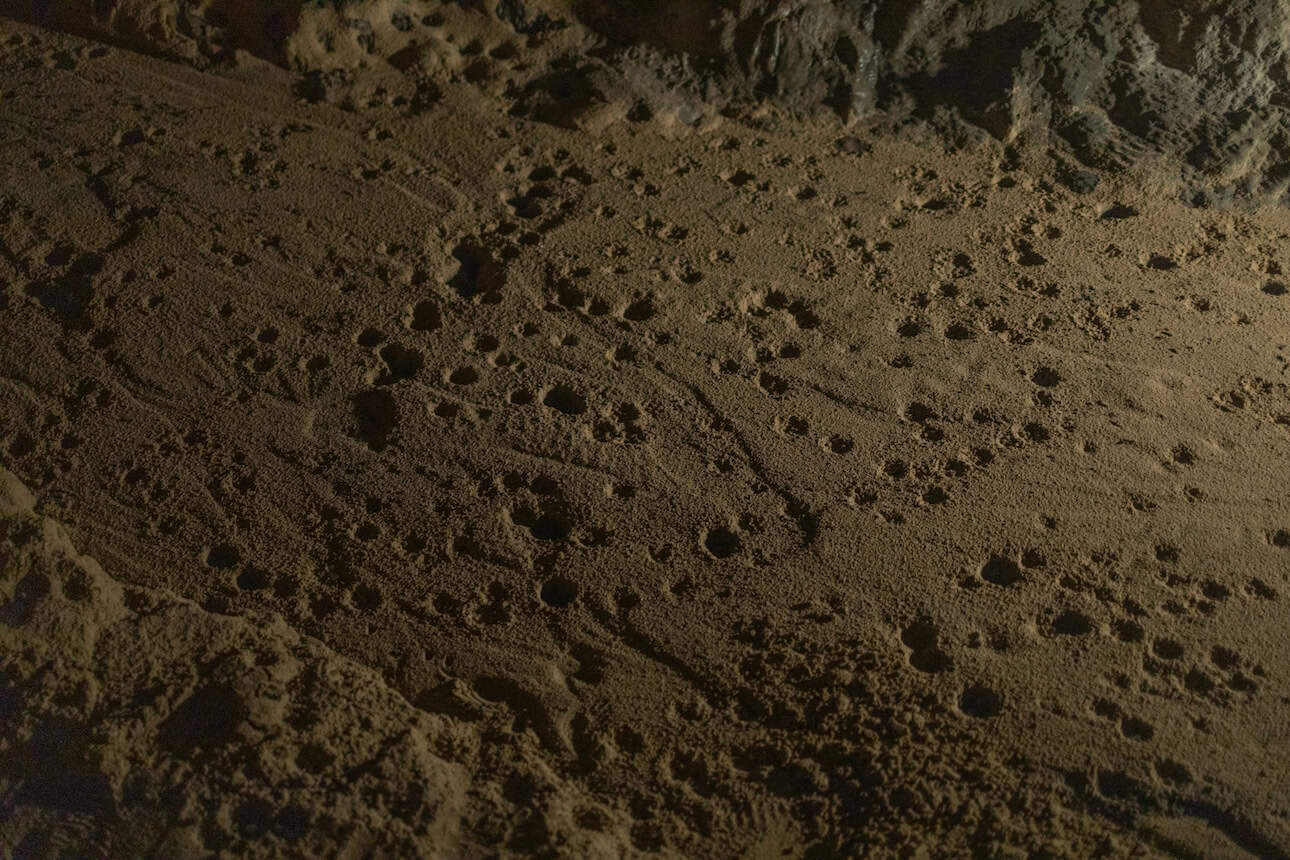
As sediments travelling along a river stream accumulate on the ground,
a flood of water once flowed through a cave long ago.
Sands and small pebbles gathered over the terrain.
Over time, as the water continued to flow over them, solid flowstone took shape.
The water kept flowing, gradually eroding the sands and pebbles beneath,
until only the flowstone remained.
The marks of long-gone pebbles are still visible on the ceiling.
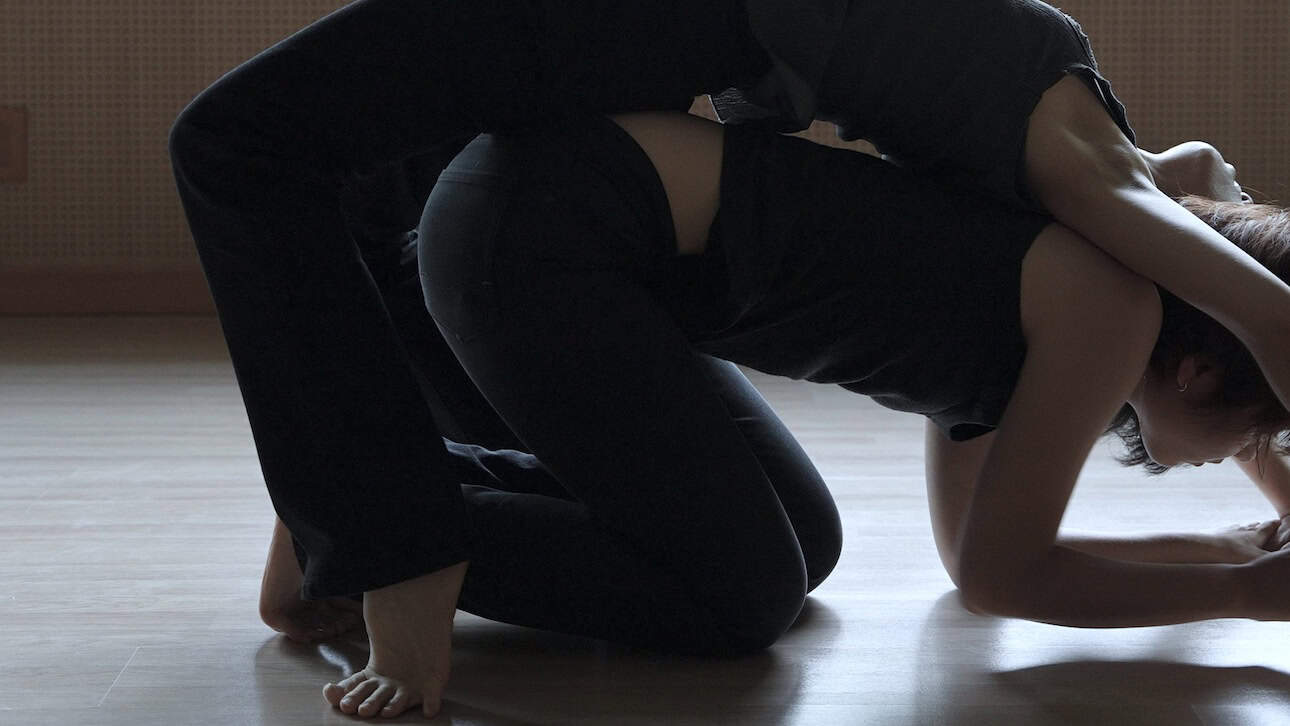
We explore a personal state beyond description—one that holds the potential to be re-inscribed through another's body. In this method, the motif of a cave is linked to two performers, who together record the process and traces of bodily formation. Like many other natural structures, a cave is a space that allows other beings to enter it; at the same time, it is a body with volume and surface. Within the cave, where multiple times and vectors overlap through countless internal and external events, the distinctions among wall, ceiling, and floor lose their meaning.
At the same time, there are two bodies of performers. Facing away from each other, they shift their body weight toward one another while reaching towards each other. The bodily formation created through this act allows only limited movement. Meanwhile, the tactile senses of their bodies – the surfaces of their backs, the backs of their legs and arms, and their fingertips - awaken. Within the space of their bodies, collapse and construction occur as inseparable actions.
The bodies of the cave and performers appear as landscape, surface, or structure, depending on their distance from the camera. In the juxtaposed images, they merge and interconnect, repeatedly expanding into beings that have more than one body and state.
‹유석의 등›
김영현
강에 물이 흐르면 퇴적물이 바닥에 쌓이는 것처럼
오래전 동굴에서도 많은 양의 물이 흘렀고
모래와 작은 돌들이 바닥에 쌓였다.
이후 쌓인 퇴적물 위에 다시 물이 흐르면서 단단한 층의 유석이 만들어졌다.
그 후에도 물은 계속 흘러 유석 아래의 모래와 작은 돌들을 전부 깎아 없앴고
그 위에 자랐던 유석만이 남아있다.
천장에 남아있는 작은 돌들의 흔적.
언어화되기 어려운 개인의 상태가 다른 이의 몸을 경유함으로써 다시 쓰일 수 있는 잠재적인 상태가 되는 것에 관해 탐구한다. 탐구의 방법으로 동굴과 두 퍼포머를 연결하여 이들 몸의 형성 과정과 흔적을 담는다. 많은 자연물이 그렇듯 동굴은 다른 존재가 들어설 수 있는 공간이면서 부피와 표면을 가진 몸이다. 수많은 내외부적 발생으로 인해 다중의 시간과 방향이 중첩되는 동굴에서는 벽-천장-바닥을 구분하는 언어가 작동하지 않는다.
동시에 두 퍼포머의 몸이 있다. 이들은 몸과 얼굴의 방향을 멀리한 채 서로에게로 손을 뻗어 무게를 이동한다. 무게 이동의 과정에서 만들어진 몸의 형태는 제한적인 움직임만을 가능하게 하는 동시에, 등의 표면과 팔다리의 후면, 손끝과 같은 세부적인 감각을 활성화한다. 몸의 공간 안에서 무너짐과 지어짐은 구분 없이 이어진다.
동굴과 퍼포머의 몸은 카메라와의 거리로 인해 때로는 풍경으로, 표면으로, 형태로 인식된다. 병치되는 이미지 속에서 이들은 서로를 경유하여 또 다른 몸과 상태를 가진 존재로 확장하길 반복한다.
Kim Young Hyun
Kim Young Hyun explores the multiple relations and temporalities
arising from the ineffable states of bodies and minds. Working across
various media—including sculpture, video, and performance—Kim is par ticularly interested in the notion of collective care within contemporar y contexts, approached from the perspective of curatorial planning.
김영현
김영현은 언어를 벗어나는 몸과 정신의 상태, 그리고 이로부터 추동되는 존재들의 다중적인 관계와 시간을 탐구한다. 조각, 비디오, 퍼포먼스 등 다매체를 시도하며, 동시대와 연결되는 돌봄과 공동의 움직임을 기획의 측면에서 살피는 것에도 관심을 갖고 있다.